Retiring in Mexico: What Americans actually need to know in 2026
An honest guide to retiring in Mexico: what it actually costs, how the visa process works, what healthcare looks like, and what the experience is really like for Americans who have made the move.
IN THIS GUIDE
Mexico is not a retirement trend. It is a retirement reality for more than two million Americans who have already made the move, and the numbers have been rising consistently since 2019.
The reasons are not complicated. A comfortable life in Mexico costs a fraction of what an equivalent life costs in the United States. The private healthcare system in major cities is genuinely excellent. The climate is hard to argue with. And unlike retiring to Portugal or Thailand, you are never more than a few hours from family.
What this guide does not do is sell you on Mexico. The facts do that well enough on their own. What it does is give you a clear, specific picture of what retiring here actually involves, so that when you make the decision, you make it with accurate information rather than optimistic summaries.
1. Why over two million Americans have already made the move
The scale of US retirement migration to Mexico is not widely reported but it is substantial. Mexico hosts more American citizens than any other country in the world, and temporary residency applications from US citizens have risen by over 85 percent since pre-pandemic levels.
Five converging factors explain this.
COST OF LIVING A couple can live comfortably in Mexico for between $2,000 and $5,000 USD per month, with regular dining out, private healthcare, a well-located two-bedroom apartment, and a full social life. Where you land in that range depends mostly on city and on how you handle healthcare. The lower end means somewhere like Mérida or Lake Chapala. The upper end means Mexico City's best neighbourhoods or beachfront Puerto Vallarta, with comprehensive cover for two.
HEALTHCARE Private healthcare in major Mexican cities is world-class and costs a fraction of US private care. A comprehensive private health insurance policy typically costs between $370-$670 per month. Major hospitals such as ABC Medical Center in Mexico City hold international accreditations and employ English-speaking specialists trained abroad. This is one of the aspects of Mexico that surprises retirees most, in the best possible way. To qualify, you typically need to show one of the following:
VISA ACCESSIBILITY Mexico does not require Americans to apply for a visa to enter. You arrive on a tourist permit for up to 180 days, and the immigration officer decides the number of days when you enter (Ley de Migración, art. 52 fr. I). If you want to stay longer, the temporary residency process is straightforward for anyone meeting the income or savings thresholds. Mexican law does provide for a points route to permanent residency (Ley de Migración, art. 57), and command of Spanish is one of its criteria (Reglamento, arts. 124 and 125). INM has not implemented that system yet (INM), so in practice the income and savings routes involve no points test, no language requirement and no medical examination.
PROXIMITY TO THE UNITED STATES Wherever you settle in Mexico, you are not moving to the other side of the world. Most major Mexican destinations are within two to four hours of a US hub. Cancún, Los Cabos, and Puerto Vallarta have direct connections to dozens of US cities. Mexico City, Guadalajara, and San Miguel de Allende are similarly well-connected. Family visits are practical, not exhausting, and that matters more than most people expect when they are in the planning stage.
QUALITY OF LIFE The food, the culture, the social life, the warmth of people, the year-round climate. These are not secondary considerations. They are the things that make the move feel worthwhile in daily life rather than just financially sensible.
2. What retiring in Mexico actually costs
Costs vary depending on where you settle. The numbers below use Puerto Vallarta as the reference point, since it is one of the most popular destinations for American retirees and sits in the mid-range of the cost spectrum within Mexico. If you are considering Mexico City or San Miguel de Allende, costs will be slightly higher. Mérida and Lake Chapala typically come in lower.
SAMPLE MONTHLY BUDGET FOR A COUPLE IN PUERTO VALLARTA
| Monthly expense | Cost for a couple (USD) |
|---|---|
| Two-bedroom apartment, well-located | $1,500 – $2,500 |
| Groceries (local markets and supermarkets) | $300 – $500 |
| Private health insurance (two adults, mid-level) | $740-$1,340 |
| Dining out (3–4 times per week) | $250 – $450 |
| Utilities (electricity, water, internet, gas) | $100 – $200 |
| Transport (Uber, occasional taxi, no car) | $70 – $150 |
| Entertainment, culture, travel within Mexico | $100 – $200 |
| Monthly total | $3,060 – $5,340 |
Most couples settling comfortably in Puerto Vallarta land in the $2,970 to $4,750 range per month, depending heavily on neighbourhood and lifestyle. In cities like Mérida and Lake Chapala, a similar quality of life typically costs $500 to $1,000 less. Mexico City and San Miguel de Allende tend to run somewhat similar, particularly on rent. For a fuller breakdown of the numbers, including what Social Security covers and the one-off costs of arriving, see our guide to how much money you need to retire in Mexico.
Rental prices for apartments are typically quoted in MXN. A well-located two-bedroom apartment in Puerto Vallarta runs between MXN 25,000 and MXN 40,000 per month at current rates. In more premium areas or newer developments closer to the marina, expect MXN 40,000 to MXN 60,000 for a similar size with higher-end finishes.
🏴 VIAMEXICO NOTE
Rental prices across Mexico's most popular expat destinations have moved considerably over the years as international demand has increased. The figures above reflect the Puerto Vallarta market as of mid-2026. When we work with retiree clients, we spend time understanding their lifestyle and budget before making neighbourhood and city recommendations, because the right location affects both quality of life and what you actually end up spending. Talk to us about your budget.
3. Visas and residency: the right legal status for retirees
Mexico does not have a dedicated retirement visa. This surprises many people. What it has is a temporary residency process that works very well for retirees, because the qualifying criteria are built around income and savings rather than employment.
TEMPORARY RESIDENCY If you are planning to stay beyond 180 days, you need to apply for a Temporary Resident Visa at a Mexican consulate in the US before entering Mexico. You cannot convert a tourist permit to residency from inside the country.
To qualify on the income route, you need to demonstrate regular monthly income above approximately MXN 79,771 ($4,676USD) per month across six months of bank statements. Social Security payments, pension income, investment withdrawals, and rental income from property you own in the US all count toward this threshold.
Temporary residency is issued for one year and can be renewed annually for up to four years. After four years, you can apply for permanent residency.
PERMANENT RESIDENCY After four consecutive years on temporary residency, permanent residency is a straightforward application. It has no expiry date. You can also apply for permanent residency directly from the outset if you meet the higher income or solvency thresholds, though most retirees find the four-year path the more accessible route.
INCOME REQUIREMENTS FOR 2026 The income threshold is set as a multiple of Mexico's UMA (Unidad de Medida y Actualización) and is revised each February. The 2026 daily UMA is 117.31 pesos (INEGI / DOF 9 January 2026). At current rates, the approximate qualifying levels are:
| Qualifying route | Temporary residency | Permanent residency (direct) |
|---|---|---|
| Monthly income (net, last 6 months) | MXN 79,771 ($4,676USD) / month | MXN 133,733 ($7,839 USD) / month |
| Savings / investments (held 12 months) | MXN 1,344,373 ($78,800 USD) | MXN 5,378,664 ($315,268 USD) |
Whether you qualify comes down to your income or your savings, assessed separately. Our residency calculator checks both against the current thresholds, including the pensioner route to permanent residency.
For a detailed guide to the full application process, including documents, timelines, and what happens at each stage, see our How to Get Temporary Residency in Mexico: The Complete 2026 Guide.
4. Healthcare in Mexico: what retirees need to know
Healthcare is the subject that comes up in almost every conversation we have with Americans considering retirement in Mexico. The concern is understandable. For most Americans, healthcare access is tied to employment, and the prospect of losing that safety net can feel significant.
The reality in Mexico's major cities is considerably more reassuring than the concern suggests.
THE PRIVATE HOSPITAL SYSTEM Mexico City, Guadalajara, Monterrey, and several other major cities have private hospitals that meet international standards by any meaningful measure. ABC Medical Center (the American-British Cowdray Medical Center) is the benchmark in Mexico. It holds Joint Commission International accreditation, employs English-speaking consultants across every major specialty, and has facilities comparable to leading private hospitals in the US or UK. Médica Sur and Hospital Ángeles are also widely used and trusted by the expat community.
You pay for private care in Mexico in one of two ways: through private health insurance (which most expats carry), or out of pocket. Out-of-pocket costs are dramatically lower than their US equivalents. A GP consultation typically costs $45 to $80 USD.
A specialist appointment runs much the same, $45 to $80 for a general specialist, rising to $85 to $145 for an established name in a major city. Even significant procedures cost a fraction of what they would without insurance in the US.
PRIVATE HEALTH INSURANCE Private health insurance is the biggest healthcare cost to plan for, and it rises steeply with age. 2026 Mexican market reference ranges put a broad-cover local policy for someone aged 56 to 65 as high as $140,000 pesos a year, roughly $684 a month. Most local insurers will not issue a new policy past 70, and applicants between 65 and 70 face medical underwriting. Our guide to healthcare in Mexico covers the local and international options in detail.
International health insurance is also an option and makes sense for retirees who divide their time between Mexico and the US, since it covers both countries. These policies cost more than Mexican-only policies but offer greater flexibility.
IMSS Once you have legal residency in Mexico, you can enrol voluntarily in IMSS, Mexico's public healthcare system. The annual fee varies by age. As a reference point, someone in their 60s currently pays around MXN 19,800 per year, meaning a retired couple in the same age bracket would pay approximately MXN 39,600 per year combined. Acceptance is not automatic. IMSS applies permanent exclusions for several pre-existing conditions and waiting periods of a year or more for others, which our guide to healthcare in Mexico sets out in full alongside what private cover buys you instead.
You can find the current rates by age group on the IMSS website.
IMSS quality varies by region and facility. Most expats and retirees use it as a secondary safety net rather than a primary healthcare resource, pairing it with a private insurance policy for specialist care and hospital admissions.
MEDICATIONS Mexico has an excellent pharmacy network. Farmacias del Ahorro and Farmacia Guadalajara are on almost every street in major cities. Many medications that require a prescription in the US are available over the counter here at a fraction of the price. That said, we always recommend establishing a relationship with an English-speaking GP on arrival rather than self-prescribing.
🏴 VIAMEXICO NOTE We help retiree clients navigate health insurance options as part of the full relocation process, connecting them with English-speaking brokers who understand both international and Mexican-market policies. Speak to us about healthcare setup.
5. Safety: an honest assessment
Mexico's national crime statistics are not representative of the daily experience of life in the areas where most retirees live. This is not spin. It is a meaningful distinction that the statistics themselves do not make clearly.
The violent crime figures that give Mexico its international reputation are concentrated in specific regions, many of which are not destinations for foreign retirees. The areas where expats and retirees predominantly live, including Puerto Vallarta, Los Cabos, Mérida, the Riviera Maya, and the established expat neighbourhoods of Mexico City, are not the same geographic reality as those statistics.
They are also not the same as each other. Mérida is not Los Cabos, and the Riviera Maya is not Yucatán. The current series and the more cautious cities are in our guide to the safest cities in Mexico to live.
This does not mean Mexico's popular expat destinations have no crime. Pickpocketing, opportunistic theft, and occasional vehicle crime exist, as they do in London, Paris, Barcelona, and every other major city where expats choose to live. The sensible precautions are the same: be aware of your surroundings, do not display expensive items in unfamiliar areas, and use Uber rather than flagging taxis at night.
Expats living across Mexico's most popular retirement destinations will broadly tell you the same thing: they feel comfortable, they move around freely, and the daily reality does not match what they feared before arriving.
Where safety requires more careful thought is in choosing where to live. Parts of Mexico are genuinely high-risk for foreigners, and those parts are well-documented. The answer to that is to settle in areas with a track record of being safe for expats, and to rely on people with current, specific local knowledge rather than general country-level advisories.
MORE GUIDANCE LIKE THIS.
Practical tips on visas, neighbourhoods, healthcare, and everyday life in Mexico, straight to your inbox.
6. The pros and cons of retiring in Mexico
THE CASE FOR
Purchasing power. Your income or savings stretch significantly further than in the US.
Private healthcare that is genuinely excellent and considerably more accessible in cost terms.
Climate. Mexico offers genuine variety: year-round spring weather in highland cities, warm coastal living on the Pacific and Caribbean, and everything in between.
Rich cultural life. Food, art, architecture, music, and a social scene that rewards engagement.
Proximity to the US. Family visits are practical. You are not cutting ties.
A large, established expat community in most major cities, which makes settling in considerably easier.
Relatively accessible visa process: the income and savings routes have no language requirement, because the points route that would score Spanish has not been implemented.
THE HONEST COUNTERCASE
The bureaucracy is real. Getting residency, a bank account, CURP, and RFC set up takes time and patience. Things move at a different pace here.
Banking as a foreigner is genuinely difficult initially. Opening a Mexican bank account requires your residency card, and some banks add additional requirements. Expect friction.
Spanish matters. In expat-heavy areas you can manage without it, but it limits your independence and your experience significantly. Learning the basics early pays back many times over.
Air quality is a consideration in Mexico City specifically, particularly in the dry season. Coastal and highland cities generally fare better on this front.
Not all healthcare outside major cities meets the standards described above. If you are considering a rural or less-developed location, the healthcare picture changes.
7. Where to retire in Mexico: a brief city comparison
Each city below will be covered in depth in its own dedicated guide. The overview here is intended to orient the comparison.
| City | Character and best for | Climate | Relative cost |
|---|---|---|---|
| Puerto Vallarta | Established beach retirement, large expat community | Warm Pacific coast | Above national average |
| Mérida | Safety, colonial culture, slower pace | Hot and humid | Lower than CDMX or PV |
| San Miguel de Allende | Arts, colonial beauty, English-speaking scene | Temperate highland | Above average |
| Lake Chapala / Ajijic | Quiet lakeside living, largest retiree community | Famously temperate | Lower |
| Mexico City | Urban, cosmopolitan, culture and healthcare | Dry, temperate, high altitude | Higher (still below US) |
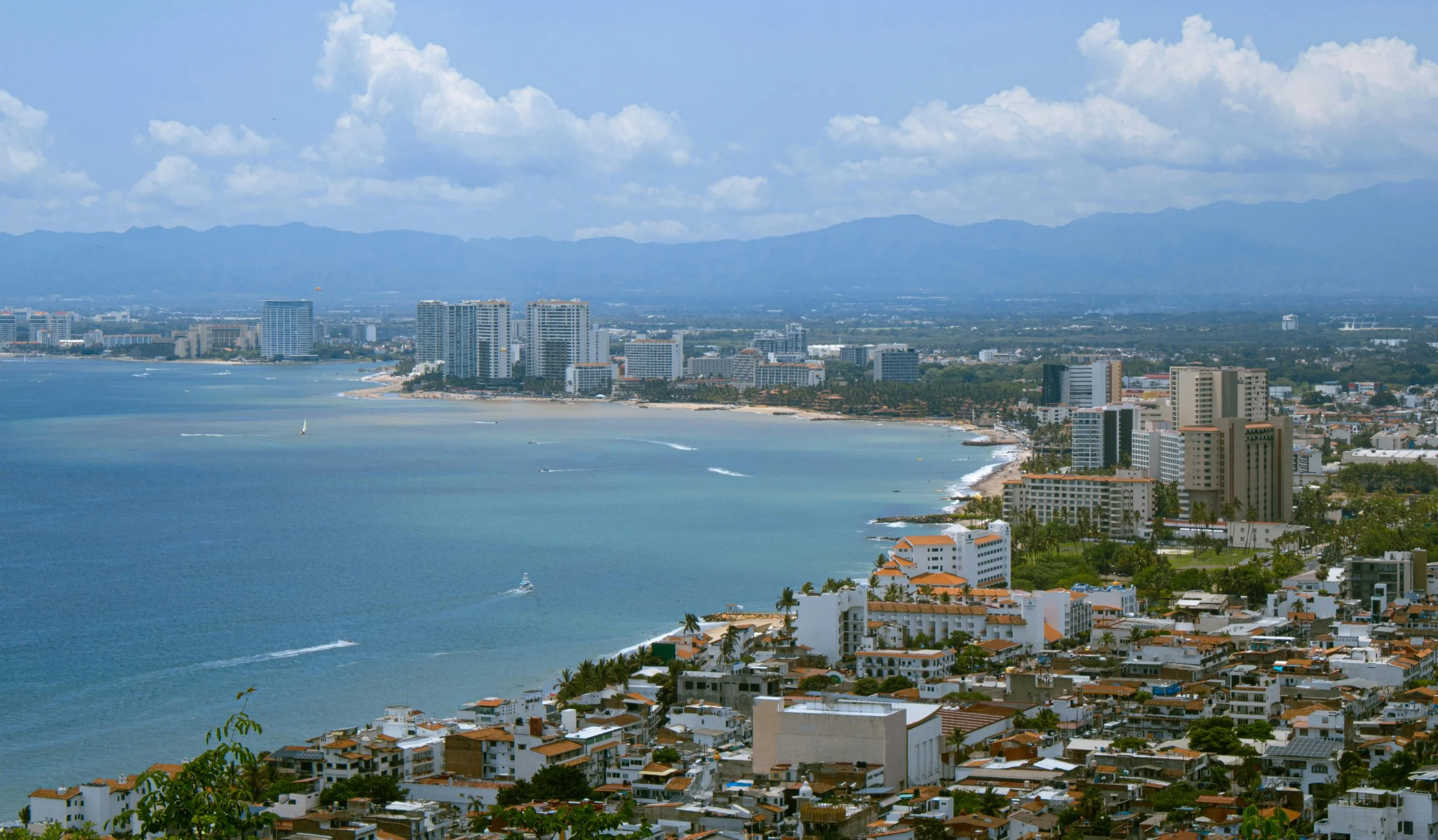
PUERTO VALLARTA The Pacific coast's most established expat retirement destination. A large and well-organised American expat community, warm beach climate, and a smaller-city feel. Costs sit somewhat above the national average for tourist areas. Good healthcare options relative to its size.
MÉRIDA The Yucatán capital has grown substantially in popularity with retirees. Lower cost of living than Mexico City or Puerto Vallarta, colonial architecture, a manageable pace of life, and a well-regarded safety record. The heat is significant for most of the year, which suits some retirees and puts others off.
SAN MIGUEL DE ALLENDE Long the favourite of American artists and retirees. A UNESCO-listed colonial city with a large English-speaking community, a rich cultural calendar, and a distinctive character. It is more expensive than most Mexican cities and the social life is more self-contained. Many retirees love it precisely for this reason.
LAKE CHAPALA AND AJIJIC The single largest concentration of American retirees in the world outside the United States. A quiet lakeside community near Guadalajara with a well-developed expat infrastructure, English-language services, and a lifestyle built around a slower pace. The community is a significant draw and a significant feature, and it is a very different experience from living in a Mexican city.
MEXICO CITY The most urban, cosmopolitan, and culturally rich option. World-class restaurants, museums, galleries, and a thriving expat community. Excellent private healthcare. Higher cost than most Mexican cities but significantly cheaper than US equivalents. Altitude affects some people. The city rewards those who engage with it.
8. Banking, taxes, and money
BANKING Opening a Mexican bank account requires your temporary residency card. On a tourist permit, most major banks will not open a standard account, so this is a step that has to wait until your residency card is in hand.
Even with residency, the process can be genuinely tedious. Branch staff familiarity with foreign residents varies considerably, even within the same bank. Some branches of BBVA, Santander, and Citibanamex handle it smoothly. Others will ask for additional documents, send you to a different branch, or decline without clear explanation. It often takes multiple attempts and some patience before an account is successfully opened.
This is one of the aspects of settling in Mexico that frustrates people most, and it is worth knowing about before you arrive rather than discovering it when you need access to local funds. Having a contact who knows which branches are reliable in your city makes a significant difference.
In the period between arriving and receiving your residency card, Wise is the most practical solution for managing transfers and day-to-day spending. Many retirees also keep a Schwab account, which reimburses ATM fees globally.
TAXES Retiring in Mexico does not remove your US tax obligations. US citizens are taxed on worldwide income regardless of where they live. If you spend more than 183 days in Mexico in a calendar year, you are also considered a Mexican tax resident with obligations to SAT, Mexico's tax authority.
The US-Mexico tax treaty prevents double taxation in most cases, but the interaction between the two systems requires specific advice from a cross-border tax specialist. This is not an area to navigate without professional guidance. Getting it wrong is costly and difficult to unwind.
Social Security payments are received internationally without restriction. There is no mechanism by which living in Mexico affects your right to receive Social Security.
For a full guide to the permanent residency process, see our article: How to Get Mexican Permanent Residency: Requirements, Timeline and Costs.
9. How to retire in Mexico: the practical sequence
The steps below represent the standard sequence for an American retiring to Mexico. The process is manageable. The difficulty is in the coordination and the detail of each step, not in any single stage being genuinely complex.
Research and visit. Spend time in your preferred city before committing. A two week stay gives you a far more accurate picture than any amount of reading.
Apply for your Temporary Resident Visa. At a Mexican consulate in the US, before you enter Mexico to stay. Prepare your income documentation carefully and verify current requirements with your specific consulate.
Arrange your housing. Choosing a well-located, furnished apartment in the right neighbourhood makes an enormous difference to how quickly you settle in. Getting this right from the start means you spend your first months enjoying Mexico rather than dealing with the stress of unsuitable accommodation.
Complete the INM process in Mexico. Within 30 days of arriving on your consulate visa. This produces your physical residency card.
Open a Mexican bank account. Once your residency card is in hand.
Set up private health insurance. Before your US coverage lapses or during the initial period, depending on your situation.
Register for RFC if needed. The RFC is Mexico's tax identification number. Required if you have Mexican-source income or certain administrative transactions.
Settle in. The practical setup takes the first month or two. After that, the experience takes over.
Every step in that sequence has its own paperwork, its own timing, and its own ways to go wrong. ViaMexico manages the full process for retirees relocating to Mexico, from your residency visa application through to your first month fully settled.
10. How ViaMexico helps retirees
We work with retirees at every stage of the process, from initial planning through to being fully settled. That means residency coordination, housing search, bank account setup, healthcare introductions, pet relocations and a private orientation of the city and neighbourhood when you arrive.
Our clients do not manage multiple contacts across multiple services. They manage one relationship with us, and we manage everything else. We would rather you chose carefully than quickly, and that applies to choosing us. Our guide to what to look for in a relocation service sets out the questions worth asking any provider, including the ones we would want you to ask us.
Ready to start planning your retirement in Mexico? Book a free discovery call and we will walk through your situation, your preferred timeline, and exactly what your relocation would involve.