How to get Mexican permanent residency: Requirements, timeline and costs

Everything you need to know about applying for permanent residency in Mexico: the three routes that lead to it, the income and savings thresholds for 2026, the documents you need, and what the process actually costs.
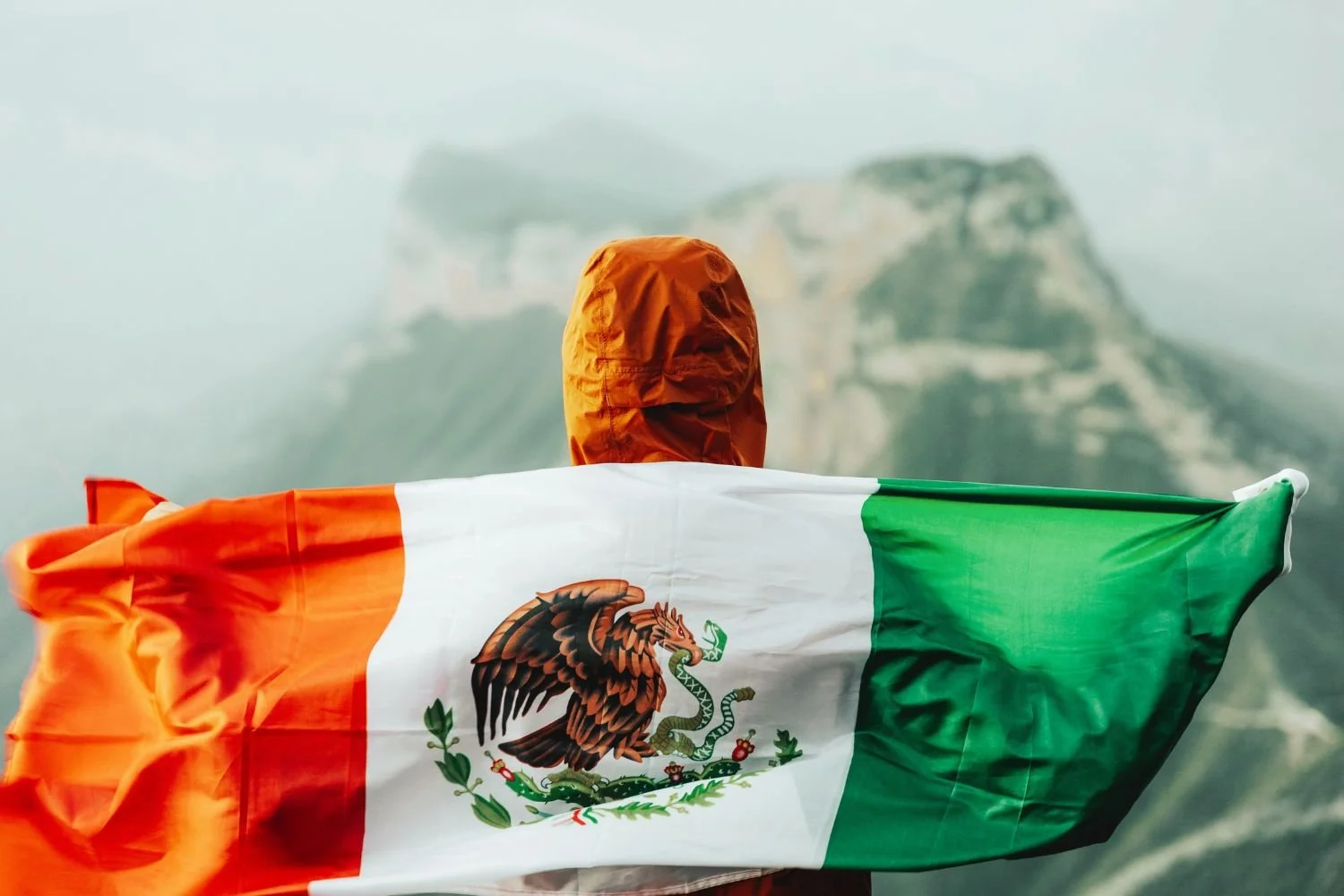
Permanent residency is the end goal for most foreigners who settle in Mexico for the long term. It removes the annual renewal cycle, gives you indefinite legal status, and includes the right to work without a separate permit. Once you hold it, your immigration status in Mexico is effectively settled for good.
There are two ways to get there. Most people arrive at permanent residency after four years of temporary residency. A smaller number qualify to apply for it directly, skipping the temporary stage entirely. Which route applies to you depends on your circumstances and, in the case of the direct route, on meeting a significantly higher financial threshold.
This guide covers both paths as they stand in 2026, what each one requires, and where the process most often goes wrong.
1. What permanent residency in Mexico gives you
A permanent resident card (tarjeta de residente permanente) gives you the right to live in Mexico indefinitely, with no expiry date and no annual renewal. It is the most secure immigration status available short of citizenship.
With permanent residency, you can:
Live in Mexico indefinitely with no renewal requirement
Work in Mexico without needing a separate work permit. That is for people who already hold this status. A company hiring a foreign employee who does not yet have permanent residency uses a different process, in our guide to getting a Mexico work visa for an employee.
Open bank accounts and hold financial products as a permanent resident
Import household goods on a one-time basis under a menaje de casa
Move toward Mexican citizenship, if you choose to, after the qualifying residency period
The single biggest practical advantage over temporary residency is that you stop renewing. Temporary residents repeat a renewal process every year for up to four years. Permanent residents do it once and never again. For retirees in particular, this is the status worth aiming for.
The one thing permanent residency does not allow is unrestricted time outside Mexico if you are pursuing citizenship later, since citizenship applications look at physical presence. For residency itself, however, there is no minimum stay requirement to maintain the status.
2. The routes to permanent residency: Four-year path, direct application, and family unity
There are three qualifying routes to permanent residency, and they are very different in who they suit.
ROUTE 1: THE FOUR-YEAR PATH FROM TEMPORARY RESIDENCY
This is how the majority of foreigners reach permanent residency. You hold temporary residency for four consecutive years, maintaining your legal status and renewing each year, and at the end of the fourth year you become eligible to convert to permanent residency.
The advantage of this route is that the financial threshold is the one you already met for temporary residency. You are not asked to demonstrate the much higher permanent residency income or savings figures. You qualify through time and maintained status rather than through a fresh financial test.
If you have a Mexican spouse or a Mexican-born child, the timeline is shorter. Family ties can reduce the qualifying period, and in some cases allow a direct permanent application.
ROUTE 2: DIRECT APPLICATION
Some people qualify to apply for permanent residency directly, without going through temporary residency first. The most common cases are:
Retirees who can demonstrate the higher financial threshold for direct permanent residency
People who qualify through specific points-based or humanitarian categories
For self-funded retirees, the direct route is attractive because it skips four years of annual renewals. The catch is the financial requirement, which is considerably higher than the temporary residency threshold. Whether the direct route makes sense comes down to whether you comfortably clear that higher bar.
A practical example: a retired couple with substantial savings and pension income who intend to stay in Mexico permanently often benefit from applying directly. They meet the higher threshold without difficulty, and they avoid four consecutive years of renewal appointments. By contrast, a remote worker in their thirties who meets the temporary threshold but not the permanent one is almost always better served by the four-year path.
ROUTE 3: FAMILY UNITY
If you have close family ties to a Mexican national, you may qualify for permanent residency through family unity, often without meeting the financial thresholds required on the other routes.
This route typically applies to:
The parent of a child who holds a Mexican Passport
The spouse of a Mexican national, which some consulates will grant after a qualifying period of temporary residency through marriage
Other close family relationships to Mexican citizens or permanent residents, depending on the specific circumstances
Family unity is one of the most common reasons people reach permanent residency faster than the standard four-year path. The exact requirements depend on the relationship and your current status, so it is worth confirming where you stand before assuming which route applies. A parent of a Mexican child, for example, is in a very different position from someone recently married to a Mexican national.
| Route | Who it suits | Financial requirement | Where you apply |
|---|---|---|---|
| Four-year path | Most people; those already holding temporary residency | The threshold you already met for temporary (no fresh test) | Inside Mexico, at INM |
| Direct application | Self-funded retirees who clear the higher bar | MXN 133,733 ($7,839 USD/month) income or MXN 5,378,664 ($315,268 USD savings) | Consulate, then INM |
| Family unity | Those with close family ties to a Mexican national | Often no financial threshold | Consulate, then INM |
The permanent thresholds run to roughly four times the temporary ones. Our guide to Mexico residency financial requirements explains how both are worked out, what counts as qualifying income, and why figures published by different consulates rarely agree.
3. Income and solvency requirements for 2026
This is where the routes diverge most sharply.
If you are converting from temporary residency after four years, there is no fresh financial test. Your eligibility comes from maintained legal status, not from meeting a new threshold.
If you are applying for permanent residency directly, the financial requirements are significantly higher than for temporary residency. INM sets these thresholds as multiples of Mexico's UMA (Unidad de Medida y Actualización), and they are higher multiples for permanent residency than for temporary.
If you qualify through family unity, the financial thresholds often do not apply in the same way, since eligibility comes from the family relationship rather than from demonstrating income or savings. The specifics depend on your relationship to the Mexican national, so confirm what applies to your case before assuming you need to meet any financial figure at all.
As an approximate guide for 2026, the direct permanent residency thresholds are:
| Threshold | Temporary residency | Permanent residency (direct) |
|---|---|---|
| Monthly income | MXN 79,771 ($4,676 USD) / month | MXN 133,733 ($7,839 USD) / month |
| Savings / investments | MXN 1,344,373 ($78,800 USD) | MXN 5,378,664 ($315,268 USD) |
Our residency calculator will tell you whether your figures clear the permanent thresholds, and if they do not, whether the temporary route is open to you instead.
🏴 VIAMEXICO NOTE The gap between the temporary and permanent thresholds is large. The permanent income requirement is roughly $7,839 USD per month against roughly $4,676 for temporary, and the savings requirement jumps from around $78,800 to around $315,268. Consulates can differ slightly on how many months of statements they want and on document formatting, so it is always worth confirming the exact requirements for the consulate you will use, or asking us to confirm them for you. Get in touch here.
The reason the distinction matters so much is that people frequently assume the temporary and permanent thresholds are similar. They are not. A retiree who comfortably qualifies for temporary residency may fall well short of the direct permanent threshold, which is exactly why the four-year path exists and why most people use it.
4. The documents you need
The document package depends on which route you are taking.
For the four-year conversion, you will typically need:
Your current temporary resident card
Proof of continuous legal residency across the four years
A valid passport
Proof of your Mexican address (a recent utility bill)
The completed INM application form and fee payment
For a direct application, you will typically need:
A valid passport
Bank or investment statements demonstrating the permanent threshold
The completed application form
Passport photographs to specification
Proof of address, depending on the stage and consulate
For a family unity application, you will typically need:
A valid passport
Proof of the qualifying family relationship (a Mexican birth certificate for your child, a marriage certificate, or equivalent official documentation)
The Mexican national's identification or residency documentation
The completed application form
Passport photographs to specification
Proof of address, depending on the stage and consulate
Because the family unity route relies on the relationship rather than a financial threshold, the documentation that proves that relationship is the most important part of the package, and it usually needs to be official, current, have an apostille and be translated.
Direct applications begin at a Mexican consulate outside Mexico, usually in the country where you live, in the same two-stage structure as temporary residency: consulate first, then INM in Mexico. Family unity applications can also begin inside Mexico as a change of status. Four-year conversions are handled entirely within Mexico at INM.
5. How to apply: The step-by-step process
The process differs by route.
IF YOU ARE CONVERTING AFTER FOUR YEARS
This is handled inside Mexico at your local INM office. As your fourth year of temporary residency comes to an end, you apply to convert rather than to renew. You present your residency history, your current card, proof of address, and pay the fee. INM processes the change and issues your permanent resident card.
The timing matters. You apply as your temporary residency approaches its renewal point in the fourth year, not after it has lapsed. Letting your temporary status expire before converting creates complications that are entirely avoidable.
IF YOU ARE APPLYING DIRECTLY
The direct route follows the same two-stage structure as temporary residency:
STEP 1: Apply at the Mexican consulate in your home country. You cannot start this from inside Mexico on a tourist permit. You submit your application and financial documents, attend a short interview, pay the consulate fee, and if approved receive a visa sticker in your passport.
STEP 2: Complete the process at INM in Mexico. Within 30 days of entering Mexico on your consulate visa, you present at your local INM office, submit the application and fee, provide proof of address, and have your photograph and fingerprints taken. Your permanent resident card is then issued.
For a full walkthrough of how the two-stage consulate and INM process works, see our complete guide: How to Get Temporary Residency in Mexico: The Complete 2026 Guide. The mechanics of the direct permanent route mirror it closely.
MORE GUIDANCE LIKE THIS.
Practical tips on visas, neighbourhoods, healthcare, and everyday life in Mexico, straight to your inbox.
6. How long it takes
For the four-year conversion, the process is usually quick once you apply, since you are already in the system. Expect a few weeks from application to card issuance, depending on your INM office.
For a direct application, the timeline mirrors temporary residency: a consulate appointment wait with no set length, from a day to around two months depending on the consulate, followed by INM processing in Mexico that usually produces the physical card within two weeks. The appointment decides the overall pace, and a consulate with earlier dates can bring the move forward considerably.
If you are converting, the key date to track is your fourth-year renewal point. If you are applying directly, check consulate appointment dates before you fix your moving date.
7. What it costs
The government fees for permanent residency are modest, and the exact amount depends on your route.
| Cost | Approximate amount (2026) |
|---|---|
| Permanent resident card (standard) | MXN 13,579 ($796 USD) |
| Permanent resident card (family unity rate) | MXN 6,789 |
| Change of status fee (converting after 4 years) | MXN 1,847 ($108 USD) |
| Consulate application fee (direct route) | $40 – $60 USD |
| Document translation (if required) | $50 – $150 USD |
| Apostille / certification (if required) | Varies by country |
| Professional support (if used) | Varies |
The most important point on cost is that permanent residency is a one-time expense. Unlike temporary residency, there are no annual renewal fees to repeat. Over a four-year horizon, that difference adds up.
8. Common mistakes that get applications rejected
These are the ones we see most often.
Assuming the direct route thresholds match the temporary ones. This is the single most common misunderstanding. People prepare for permanent residency expecting the temporary income figure and discover the permanent threshold is multiples higher. If you are applying directly, confirm the permanent figure before you prepare anything.
Letting temporary residency lapse before converting. If you are on the four-year path, your conversion should happen as your fourth-year renewal point arrives, while your status is still valid. Allowing it to expire first turns a straightforward conversion into a far messier problem.
Bank statements in the wrong format. Consulates expect statements showing the account holder's name, the institution, the account number, and a running balance, often accompanied by a certified bank letter. Screenshots from an online banking portal are frequently rejected.
Miscounting the four years. The qualifying period is four consecutive years of temporary residency with maintained status. Gaps, lapses, or time spent on a tourist permit do not count toward it. If your residency history has interruptions, get advice before assuming you are eligible to convert.
Not applying the same scrutiny to whoever you pay to handle it. The care you put into your own documents is wasted if the person preparing them does not know the current requirements of your consulate. Before you commit a deposit, it is worth knowing what separates a good provider from a bad one.
9. How ViaMexico helps with permanent residency
Permanent residency is the most valuable immigration status most foreigners will hold in Mexico, and the route that gets you there matters. Choosing the four-year path when you could qualify directly, or attempting the direct route without clearing the financial threshold, both cost time and money that careful planning avoids.
ViaMexico helps you choose the right route for your situation, prepares your documentation to the requirements of your specific consulate or INM office, and coordinates the process from start to finish. For clients on the four-year path, we manage the conversion at the right moment so temporary status never lapses. For those applying directly, we handle the full consulate and INM sequence.
If you are planning a permanent move to Mexico, the time to think about which residency route to take is before you start, not after.
Ready to plan your permanent residency? Book a free discovery call and we will walk through your situation, the right route for you, and what you need to prepare.