Retiring in Puerto Vallarta and Banderas Bay: The honest expat guide for 2026

What retiring around Banderas Bay actually looks like in 2026: what a couple really spends, how the towns from Sayulita to Boca de Tomatlán differ, how healthcare works, and what to know before committing to one part of the bay.
IN THIS GUIDE
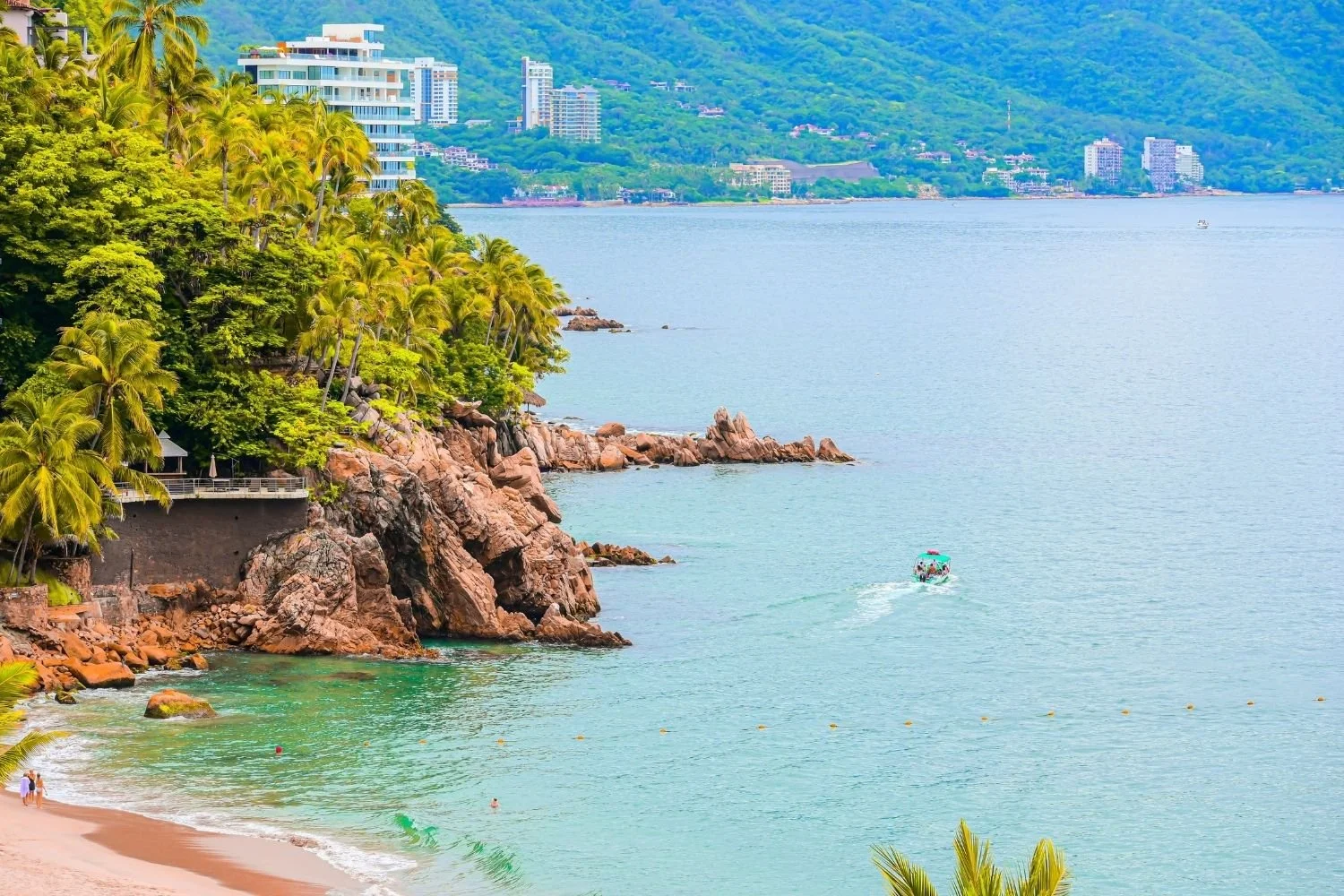
A retired couple can live comfortably around Banderas Bay on roughly $3,060 to $5,340 a month, depending far more on which part of the bay they choose than on how they live. Puerto Vallarta itself sits at the top of that range. Bucerías and La Cruz, half an hour north, sit below it.
That choice is the one most people underestimate. Banderas Bay is not a town, it is roughly 100 kilometres of coast running from Sayulita in Nayarit to Boca de Tomatlán in Jalisco, and the difference between its ends is the difference between a walkable town with private hospitals and a village where the road stops. Puerto Vallarta holds the airport, the healthcare and the largest share of the retiree community, which is why most people start there. A good number do not stay there.
It is not perfect, and an honest guide should say so. It is hot and humid through the summer, high season brings crowds and higher prices, and the most desirable neighbourhoods stopped being good value some years ago. For a great many retirees the trade-offs are worth it. This sets out what they actually are.
1. Why Banderas Bay attracts so many retirees
Puerto Vallarta sits on Banderas Bay, on the Pacific coast where Jalisco meets Nayarit. It is the largest bay in Mexico, and understanding that it is a bay rather than a single town is the first useful thing a prospective retiree can learn, because the decision most people are actually making is not whether to retire in Puerto Vallarta. It is which part of the bay to retire in.
The bay curves for roughly 100 kilometres from Punta de Mita in the north to Cabo Corrientes in the south. Puerto Vallarta sits in the middle and holds most of the infrastructure: the airport, the hospitals, the consulates. North of it, across the state line into Nayarit, are Nuevo Vallarta, Bucerías, La Cruz de Huanacaxtle and Sayulita. South, along a coast road that runs out of tarmac before it runs out of coast, are Conchas Chinas, Mismaloya and Boca de Tomatlán.
The draws are consistent across the bay:
A large, established, English-speaking retiree community
Private hospitals in Puerto Vallarta with English-speaking doctors and specialists
Direct flights from Puerto Vallarta to a long list of US and Canadian cities
A warm climate all year
Housing that ranges from beachfront condominiums to quiet inland streets
A walkable town centre with the malecón at its heart
What sets Banderas Bay apart from some other Mexican retirement destinations is that Puerto Vallarta is a genuine year-round town rather than a resort strip. You can live there through the low season, see the same faces, join the same clubs, and build something that does not empty out in May.
VIAMEXICO NOTE Most retirees who settle around the bay do not choose their town before arriving. They rent in Puerto Vallarta for a season, drive the coast, and then decide. If you can structure your move to allow that, it is worth doing. The difference between Bucerías and Zona Romántica is not one you can judge from photographs.
2. The bay, town by town
Sayulita, Nayarit The furthest north of the places retirees seriously consider, about an hour from Puerto Vallarta. A surf town that became a destination, now busy, walkable and firmly on the tourist map. Rents are broadly comparable to Puerto Vallarta rather than higher, but the market is the most visitor-facing on the bay: listings are advertised in dollars, quoted by the night, and turn over with the season. Long lets at a resident rate exist and are found through local noticeboards and Facebook groups rather than through search. Budget separately for electricity, which is rarely included and which leaves the subsidised tariff band as soon as you run air conditioning.
La Cruz de Huanacaxtle, Nayarit A working fishing village with a marina attached, about 45 minutes north of Puerto Vallarta. Quieter than Bucerías and much less developed than Nuevo Vallarta, with a well-regarded Sunday market and a settled community of Mexicans and foreigners living alongside each other. Rents sit below Puerto Vallarta for equivalent space, and longer commitments are priced lower, so a twelve-month term usually costs less per month than a six-month one. A good deal of what is available never appears online at all.
Bucerias, Nayarit The most popular alternative to Puerto Vallarta itself, about 30 minutes north. A long flat beach, a cobbled old town, and enough restaurants and services to live without going into the city most weeks. Four areas matter and they price in this order: the Golden Zone for beachfront dining and walkability at a premium, Los Picos to the northwest where the new condo towers have gone up, Downtown near the plaza and the markets, and the Terralta and Los Amores gated communities inland, which are where a good number of long-term residents end up and which sit well below the beachfront.
Nuevo Vallarta, Nayarit Planned, modern and low-rise, built around marinas and golf. Condominium living with amenities, gated developments, and very little that predates the 1990s. The rental market here is dominated by resort and holiday letting more than anywhere else on the bay, which means an online price tells you very little about a year-round lease. Suits retirees who want space, security and a car, and who are not looking for a town centre.
Puerto Vallarta, Jalisco The centre of gravity. The airport, the hospitals, the consulates and the largest share of the retiree community are all here. It also has the bay's deepest long-term rental market, which is why the figures in the next section are based on it. Covered neighbourhood by neighbourhood in section 4.
Conchas Chinas Immediately south of the old town, up the hillside. Large houses, dramatic views over the bay, and steep streets that are worth thinking about carefully if mobility is likely to become a consideration. Priced at the top of the Puerto Vallarta market rather than as a separate town.
Mismaloya and Boca de Tomatlán Fifteen to twenty minutes further south, where the mountains come down to the water. Small, quiet and green, with a handful of restaurants and not much else. Boca de Tomatlán is where the road ends and the boats to the southern beaches leave from. A thin rental market with few formal listings, so most of what comes up is found locally rather than online.
Two things worth saying plainly about the north-south choice. The state line matters more than it looks: Nayarit and Jalisco run separate state bureaucracies, and a property or a vehicle registered in one is administered under that state's rules. And everything north of the airport means crossing the bay's one significant traffic bottleneck whenever you go into town, which is a minor irritation in September and a real one in February.
One thing worth understanding about the whole bay. Almost everything you can find online is the visitor market: priced in dollars, quoted by the night, and aimed at people staying weeks rather than years. The resident market runs alongside it on noticeboards, Facebook groups and handwritten signs in windows, and it costs materially less. Arriving on a short let and finding the long one in person is the approach most people who live here ended up taking, and it is why the figures in the next section assume Puerto Vallarta, where the two markets overlap most.
If you are still weighing the bay against other parts of the country rather than choosing within it, our comparison of the best cities in Mexico for expats sets Puerto Vallarta against Mérida, Lake Chapala and the rest on climate, community and pace, and our Mérida destination page covers the inland alternative in depth.
3. Cost of living: what a couple actually spends
The figures below are for Puerto Vallarta itself, used here as the benchmark for the bay. It has the deepest long-term rental market and the most reliable published prices, and apart from the hillside above the old town it sits at the top of the range, which makes it the safest assumption to plan against. Bucerías, La Cruz and the villages to the south come in below it, in some cases well below.
| Monthly expense | Cost for a couple (USD) |
|---|---|
| Two-bedroom apartment, well-located | $1,500 – $2,500 |
| Groceries (local markets and supermarkets) | $300 – $500 |
| Private health insurance (two adults, mid-level) | $740-$1,340 |
| Dining out (3–4 times per week) | $250 – $450 |
| Utilities (electricity, water, internet, gas) | $100 – $200 |
| Transport (Uber, occasional taxi, no car) | $70 – $150 |
| Entertainment, culture, travel within Mexico | $100 – $200 |
| Monthly total | $3,060 – $5,340 |
Cost is one of the clearest differences between the towns on the bay. Puerto Vallarta and Nuevo Vallarta sit at the top, Bucerías and La Cruz below them, and the southern villages vary so much by property that a range is close to meaningless. The budget above assumes Puerto Vallarta itself, which is the most expensive assumption you can make and therefore the safest one to plan against. For the same exercise run across every major retirement destination in the country, see how much money you need to retire in Mexico.
In pesos, a well-located two-bedroom runs MXN 25,000 to 40,000 a month. The peso amounts are the real figures. USD equivalents are converted as of August 2026 and will shift with the exchange rate. Rents vary by neighbourhood and by season, and the gap between a long-term local rate and a short-term tourist rate is large. The top of the beachfront range is genuinely open-ended, and the figure above is where the market thins rather than where it stops.
4. Where to live: neighbourhoods in Puerto Vallarta itself
Puerto Vallarta is really several distinct areas, each with a different character and price point.
Zona Romántica (Old Town, Emiliano Zapata) The most popular area for expats and retirees. Walkable, lively, full of restaurants and cafés, and close to the malecón and the beach. It is also the most expensive and the busiest, particularly in high season. Ideal if you want to be in the middle of everything and do not mind crowds.
Versalles A residential neighbourhood that has become increasingly popular with expats in recent years. More local in feel than Zona Romántica, with a growing restaurant scene, and generally better value. A strong choice for retirees who want walkability without the tourist density.
Fluvial Vallarta A quieter, well-planned residential area popular with those who want a calmer, more suburban feel. Good for retirees who prefer space and quiet over being in the thick of it.
Marina Vallarta A planned marina district with condos, golf, and a more resort-like feel. Popular with those who want amenities and a waterfront lifestyle without being in the busy old town.
The right neighbourhood depends on the life you want and on how much of the bay you intend to use. Walkable and social points to Zona Romántica or Versalles. Quiet and spacious points to Fluvial or Marina Vallarta, or north across the state line to the towns in section 2.
5. Healthcare around the bay
Healthcare is one of the bay's genuine strengths as a retirement destination, which matters enormously when you are choosing where to spend your later years.
Puerto Vallarta has well-regarded private hospitals, including internationally recognised facilities, and a large number of English-speaking doctors and specialists who are used to treating expat patients. For most routine and many specialist needs, the standard of private care is high and the cost is a fraction of what the equivalent would be in the US.
The hospitals are in Puerto Vallarta, which is the practical reason the town remains the default choice on the bay. From Bucerías that is around half an hour on a good day, from La Cruz a little more, from Sayulita closer to an hour, and from the southern villages around twenty-five minutes. If you are choosing where on the bay to live and healthcare access matters to you, that drive is worth timing yourself in February traffic rather than reading about.
Your main healthcare options as a retiree:
Private care out of pocket: A private GP consultation runs MXN 800 to 1,400, roughly $45 to $80. An established specialist runs MXN 1,500 to 2,500, roughly $85 to $145. Both are usually paid directly rather than claimed.
Private health insurance: Mexican or international policies that cover private hospital treatment. Worth having for major procedures and emergencies rather than for routine visits.
IMSS: Mexico's public health system, which legal residents can enrol in voluntarily for an annual fee. A useful safety net, though most expats use it alongside private care rather than instead of it.
The eligibility rules matter as much as the prices here, and our guide to healthcare in Mexico for expats sets out the exclusions IMSS applies and what Mexican and international policies each cost by age.
For complex or serious conditions, Guadalajara is a few hours away and has some of the best hospitals in the country. Many retirees around the bay handle routine care locally and travel to Guadalajara for anything major.
MORE GUIDANCE LIKE THIS.
Practical tips on visas, neighbourhoods, healthcare, and everyday life in Mexico, straight to your inbox.
6. The expat community
Puerto Vallarta has one of the most established and welcoming expat communities in Mexico, and this is a large part of why people choose it over less developed destinations.
There are active social clubs, volunteer organisations, charity groups, and interest-based meetups covering everything from hiking to bridge to live music. The community skews North American and English-speaking, which smooths the transition for retirees who do not yet speak Spanish, though learning some Spanish will always improve your experience and your integration.
The town is also notably welcoming and open, with a long history as an inclusive destination. Retirees consistently report that making friends and building a social life takes less effort in Puerto Vallarta than they expected, precisely because the infrastructure for it already exists.
The community thins as you move away from Puerto Vallarta. Bucerías has an established foreign contingent of its own, La Cruz a smaller and quieter one, and the southern villages very little. That is a benefit or a drawback depending on what you are looking for, but it is worth knowing before you commit to a lease somewhere quiet.
The flip side, worth naming honestly, is that it is possible to live around the bay almost entirely within an English-speaking bubble. Whether that is a pro or a con depends on what you want from the move. Those who make an effort to engage with local life beyond the expat scene generally find the experience richer.
7. Visas and residency
To retire around Banderas Bay properly, you will want temporary or permanent residency rather than living on tourist permits. Residency lets you open a local bank account, sign a long-term lease in your own name, and access IMSS, none of which work well on a tourist footing.
The process is the same wherever in Mexico you intend to settle: you apply at a Mexican consulate in your home country first, then complete the process at an INM office once you arrive. Puerto Vallarta has its own INM office, so the in-country stage is handled locally wherever on the bay you end up living.
For the complete walkthrough of the process, see our guide to temporary residency in Mexico.
Most retirees start on temporary residency and either renew toward permanent status over four years or, if they meet the higher financial threshold, apply for permanent residency directly. Our guide to the financial requirements for Mexican residency sets out both thresholds in full, with the current figures and where they come from.
If you want to check your own income or savings against those thresholds, including dependants and today's exchange rate, our residency calculator will do it in four questions.
8. Getting there and getting around
Puerto Vallarta's international airport sits roughly in the middle of the bay and has direct flights to a long list of US and Canadian cities, which is a major practical advantage for retirees who want to visit family or have family visit them. Flight times to much of the US are short, and the connectivity is far better than at many smaller Mexican destinations.
Within Puerto Vallarta, much of expat life is walkable, particularly in Zona Romántica and Versalles. Buses are inexpensive and plentiful, taxis and rideshare are reasonably priced, and many retirees find they do not need a car if they live centrally.
Elsewhere on the bay, a car stops being optional. Bucerías, La Cruz, Nuevo Vallarta and Sayulita all assume you drive, and so do the villages to the south. Buses do run the coast road in both directions and they cost very little, but they are slow and they will not help you carry a week's shopping home.
One practical point about the geography. The airport sits between Puerto Vallarta and the northern towns, and the road past it is the bay's one significant bottleneck. Crossing it is a minor irritation in September and a real one in February, and it applies every time you travel between the north of the bay and the town, including to the hospitals.
9. Pros and cons
An honest summary.
The pros:
Excellent private healthcare at a fraction of US costs, with English-speaking doctors
A large, established, welcoming expat community
Walkable town centre and a beautiful bay-front setting
Direct flights to many US and Canadian cities
Warm climate year-round
A genuine year-round town rather than a resort strip
A real choice of places within one bay, from walkable urban to quiet village
The cons:
Hot and very humid in summer, with high air-conditioning costs
High season, November to April, brings crowds and higher prices
More expensive than inland Mexican cities
Prime neighbourhoods have become pricier over the past decade
Possible to remain in an English-speaking bubble and never integrate
Serious medical care may mean travelling to Guadalajara
The towns north of the airport mean crossing a traffic bottleneck to reach the hospitals
For most retirees who prioritise community, healthcare and a walkable coastal life, the pros comfortably outweigh the cons. Those most sensitive to heat and humidity, or those seeking the lowest possible cost of living, sometimes find inland destinations a better fit.
10. Frequently Asked Questions
-
It depends almost entirely on whether you want a town or a village. Puerto Vallarta has the hospitals, the airport, the largest community and the widest choice of housing, and you can live there without a car. Bucerías is quieter, better value, and has enough of its own services that you would not go into the city every week, but you are 30 minutes from the nearest private hospital. Retirees who want to be in the middle of things choose Puerto Vallarta. Those who have had enough of being in the middle of things choose Bucerías.
-
Not in Puerto Vallarta itself. Zona Romántica, Versalles and the centre are walkable, buses are frequent and inexpensive, and rideshare works. Anywhere north of the airport or south of Conchas Chinas, a car stops being optional. This is one of the clearest practical differences between the towns and it is worth settling before you choose where to rent.
-
For some people, yes, and it is the most common reason a Banderas Bay retirement does not stick. June to October is hot and humid, and air conditioning costs are a real line in the budget rather than a rounding error. A significant number of retirees on the bay leave for the summer, which is worth knowing because it means the community you meet in January is not the community that is there in August. If heat is a concern, visit in September rather than February before committing.
-
Yes, more than the short drive suggests. Nayarit and Jalisco run their own state administrations, so vehicle registration, property matters and various local formalities follow the rules of whichever state you settle in. Federal matters, immigration included, are unaffected. It is not a reason to choose one over the other, but it does mean advice from a neighbour in Puerto Vallarta may not apply in Bucerías.
-
Almost never in any useful form. Most US domestic plans, Medicare included, pay little or nothing outside the United States. What works in practice is a Mexican or international policy for major events, with routine care paid directly, which costs far less than US readers tend to expect. Our guide to healthcare in Mexico for expats sets out the options and whateach costs by age.
11. How ViaMexico helps you retire in Banderas Bay
Retiring around Banderas Bay is a well-trodden path, which is exactly why it works. The community, the healthcare and the infrastructure are all there. What still catches people out is the practical sequence: securing residency correctly, choosing which part of the bay actually suits the life you want, finding a long-term rental at a fair local rate, setting up banking and healthcare, and avoiding the seasonal pricing traps.