The safest cities in Mexico to live: an honest 2026 assessment

Mérida sits at the bottom of Mexico's official homicide series. That is not the same as a promise about your street. Safety here is local, and the national figures do not read a neighbourhood. The city shortlist around that point is in our guide to the best places to live in Mexico.
In this guide
1. What the safety question is really asking
The safest city in Mexico to live, on the official homicide series, is Mérida. Yucatán recorded 42 presumed homicides in 2025, a rate of 2 per 100,000 inhabitants, the lowest of the 32 states. The national rate was 21.4. That is INEGI. Defunciones por homicidio, 3 August 2026, 2025 figures still marked preliminary.
That sentence answers the title. It does not answer the question most people are actually asking.
What they mean is: can I walk to dinner, can my spouse be at home during the day, and will I be unlucky in a way I would not be in Austin or Manchester. A state homicide rate cannot tell you that. A city average cannot tell you that. The honest unit is the street, at a given hour, for a given kind of person.
Mexico is not one security environment. The US State Department's Mexico advisory was listed on the country index on 29 May 2026 as Level 2, Exercise Increased Caution, with a different level for each state. Yucatán and Campeche are Level 1 on that page. Other states are not. Treating "Mexico" as a single risk is how people either cancel a workable move or fly into a city we would not place them in. This page is the assessment we use when a retiree or a family asks where they can actually live.
2. How to read Mexican crime statistics
Two official series get quoted as if they were the same number. They are not.
INEGI's Estadísticas de Defunciones Registradas counts presumed homicides from death certificates (CIE-10 codes X85 to Y09). The 2025 bulletin is preliminary. Final figures, after the Secretaría de Salud confrontation, are due in November 2026. Use the 3 August 2026 report, not a screenshot of last year's chart.
SESNSP publishes monthly incidencia delictiva: investigation files opened by state prosecutors, by offence, by state and by municipality. That is the crime series, not a body count. It is the right source for robbery, extortion and vehicle theft if you stay inside one methodology. It is the wrong source to mix with an INEGI rate in the same sentence.
What neither series tells you:
the street. A municipal rate still averages a historic centre, an industrial park and a closed residential district
crimes that are not reported. INEGI's ENVIPE 2025 (victimisation in 2024, published 18 September 2025) puts the cifra oculta at 93.2 per cent: most offences never become a prosecutor's file. It is a household survey, not a ranking of cities. PDF
whether the victim was a resident, a tourist, or someone inside a criminal dispute
what it feels like to live there
The US advisory is a third product. It is written for US citizens travelling, not for someone taking a three-year lease. A Level 2 on Mexico City is not a verdict on Roma. A Level 4 on a state is a hard stop for us. The 29 May 2026 advisory is country Level 2, with Yucatán and Campeche at Level 1 and six states at Do Not Travel: Colima, Guerrero, Michoacán, Sinaloa, Tamaulipas and Zacatecas. Live map: travel.state.gov Mexico advisory. Numbeo and crowd-sourced "safest city" lists are not in this article because they are not evidence.
3. The cities that consistently rate safest
Yucatán has sat at 2 or 3 per 100,000 every year in INEGI's 2012 to 2025 table. That is not a one-year blip. The states a foreign resident actually considers, 2025 preliminary:
| State (city clients actually consider) | 2025 rate per 100,000 | 2025 presumed homicides | What the rate does not tell you |
|---|---|---|---|
| Yucatán (Mérida) | 2 | 42 | Heat, inland city life, not a beach |
| Querétaro (Querétaro city) | 7 | 178 | Not a proxy for the rest of the Bajío |
| Ciudad de México | 9 | 817 | Alcaldía and block variation is larger than the city average |
| Jalisco (Guadalajara, Puerto Vallarta) | 16 | 1,396 | State average mixes a lakeside village, a second city, and a Pacific resort |
| Baja California Sur (Los Cabos) | 23 | 203 | Rate more than doubled from 10 in 2024. Do not treat Cabos as a 2024 story |
| Quintana Roo (Cancún, Playa del Carmen) | 28 | 536 | Tourist-corridor crime is not the same as Yucatán next door |
| Guanajuato (San Miguel de Allende sits in this state) | 51 | 3,249 | The town is not Celaya. The state rate is not a reason to call the Bajío safe |
Coahuila (3) and Durango (6) sit below Querétaro. They are not lifestyle destinations for most of our clients, so they are not on the shortlist. Best Places stays a qualitative comparison of ten places. This page is the safety overlay.
Source for every rate in the table: INEGI, Defunciones por homicidio, Tabla 1 and Tabla 2, 3 August 2026. PDF.
4. Mérida
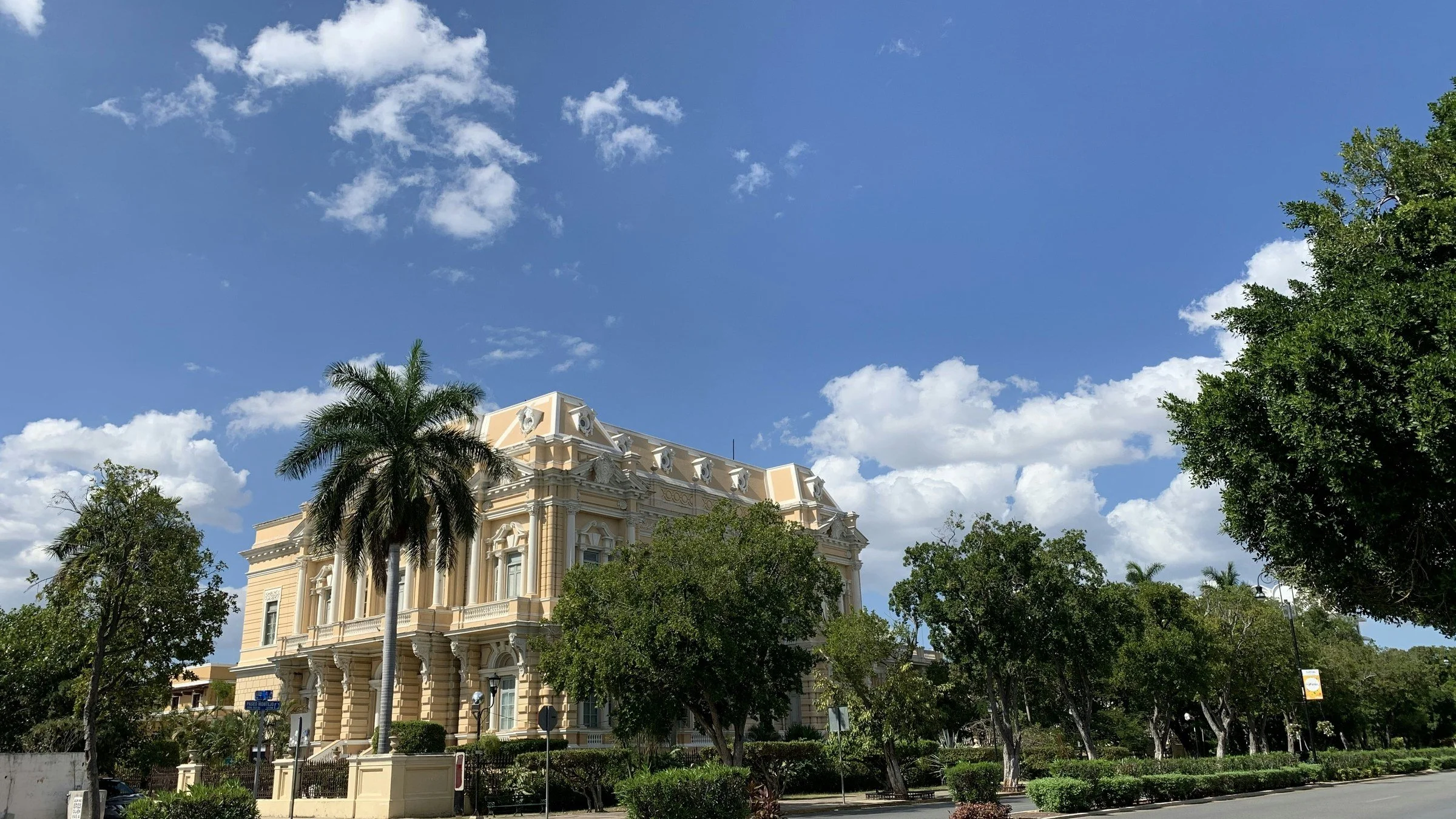
Mérida is the honest answer if the question is lethal violence. Forty-two presumed homicides in a state of 2.4 million is a different country from Guanajuato's 3,249. Yucatán is Level 1 on the US advisory, with Campeche the only other Mexican state at that level on the page we last read.
The reputation is earned, and it is marketed past the point of usefulness. Mérida is inland, colonial, and hot for much of the year. It is not a beach town. A low homicide rate is not a low pickpocket rate. People who move "for safety" and then resent the climate have answered the wrong question. The wider trade-offs sit in the Mérida section of Best Places to live in Mexico, and what everyday life in Mérida is like, from Centro to the summer heat, is on our Mérida destination page.
5. Querétaro and the Bajío
Querétaro's 2025 rate was 7 per 100,000 (178 presumed homicides). That is a real city: healthcare, an airport, industry, and a centre you can live in.
The error is to hear "the Bajío" and treat Querétaro and Guanajuato as one climate. Guanajuato's 2025 rate was 51, with 3,249 presumed homicides. Celaya, Irapuato and Salamanca are not placement cities for a retiree or a family who has a choice. Guanajuato is Level 3 on the 29 May 2026 US advisory, and US government employees may not travel to those three cities. Querétaro is a different state, and it is Level 2.
San Miguel de Allende sits in Guanajuato. It is already on our Best Places shortlist for reasons that are not this series. The town is not the state. Anyone selling "the Bajío is safe" from a San Miguel terrace is skipping Celaya. We will talk about San Miguel as a town. We will not use it as proof that Guanajuato is fine.
6. Mexico City, by neighbourhood
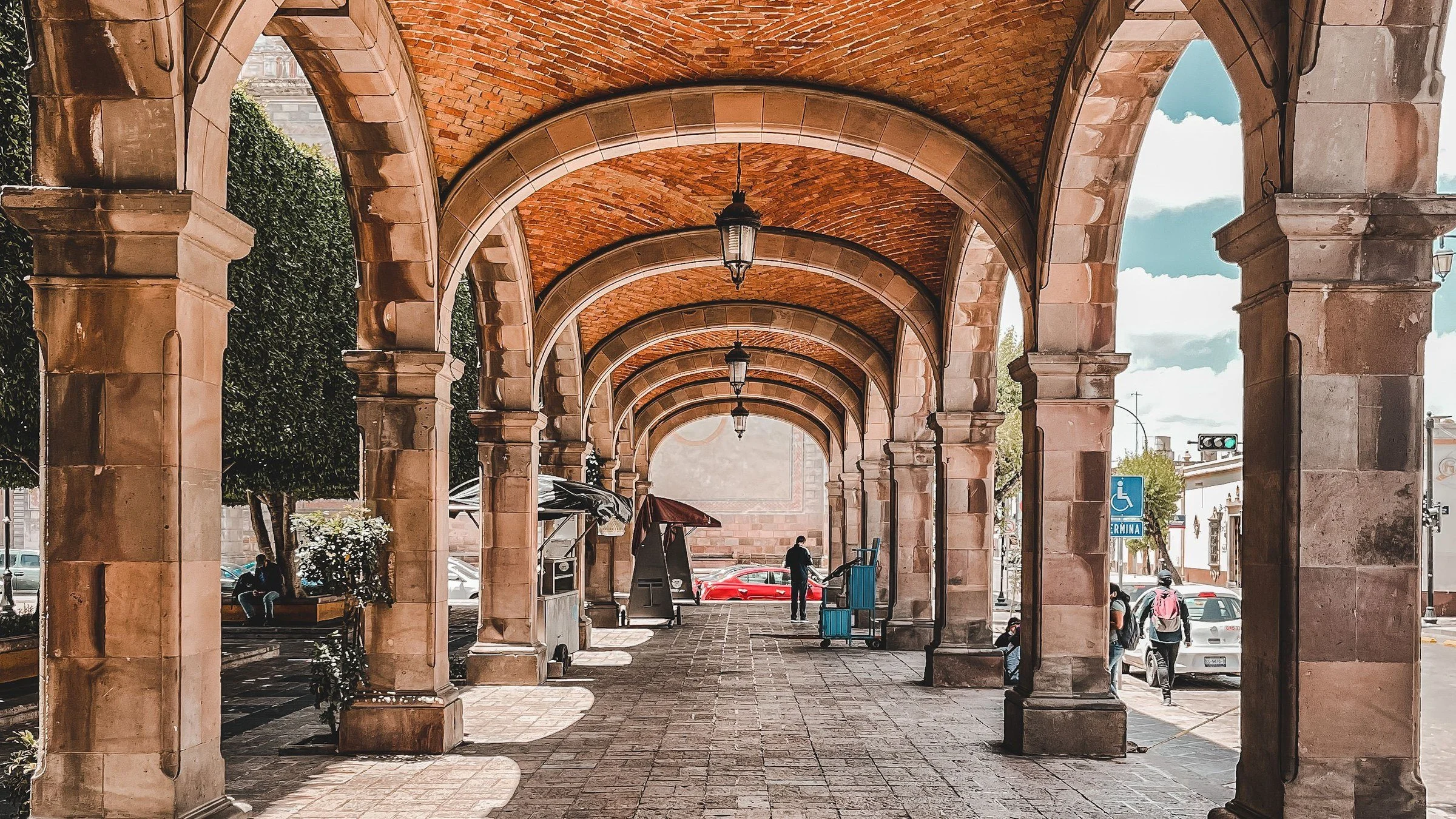
Mexico City's 2025 rate was 9 per 100,000 (817 presumed homicides). That is below the national 21.4. It is not a reason to skip the capital, and it is not a reason to treat the whole valley as Roma.
INEGI's 2025 bulletin does not give a clean alcaldía ranking. Anyone quoting a colonia rate from a dashboard that is not INEGI or SESNSP is not using a source this page will stand behind.
What we can say, from how the city is actually lived in by the people we place:
Inner mixed-use districts that stay busy after dark. On our other pages that means Roma, Condesa, Juárez and Polanco. Busy is a safety feature here. Empty is not.
Established residential districts in the west of the city, of the Lomas de Chapultepec type: quieter, more gated, more car-dependent. Different rhythm, not a different country.
The historic centre and some inner-east districts: ordinary by day, a different calculation after dark, and not where we put a first-time resident who wants to walk home from dinner.
Peripheral and some eastern and northern alcaldías: the city-level 9 is averaging these in. "Mexico City" in one of those alcaldías is not the same week as a central district.
We place on a block, not a metro map. The complete guide to moving to Mexico City already says the reputation does not always match the districts where most foreign residents live and work. This page is the overlay.
7. The coastal picture
The coast is where the postcard and the series come apart.
Puerto Vallarta sits in Jalisco (16 per 100,000). Jalisco is Level 3 on the 29 May 2026 US advisory. The state rate mixes Guadalajara, the lakeside towns, the Pacific resort, and municipalities you will not holiday in. US employees are not restricted in Puerto Vallarta, including neighbouring Riviera Nayarit, or in Chapala and Ajijic. Vallarta is a mature retiree city with ordinary urban crime. It is not Yucatán.
Los Cabos sits in Baja California Sur. The 2025 rate was 23, up from 10 in 2024, on 203 presumed homicides against 85 the year before. We are not putting Cabos in section 10. We are done talking about it as if 2024 were still the year.
The Riviera Maya sits in Quintana Roo (28 per 100,000, 536 presumed homicides). Cancún, Playa del Carmen and Tulum share a peninsula with Yucatán and they do not share its series. Families who want Caribbean water take that trade. Families who want Yucatán's numbers belong in Mérida.
Acapulco is Guerrero (39), Level 4. US government employees may not travel there. Mazatlán is Sinaloa (57), treated as Level 4.
8. Where the data and lived experience diverge
A low city rate can still be a hard city to live in. Mexico City at 9 does not feel like Mérida at 2. Scale and traffic are not in the table. People who are fine with the numbers and then miserable in the capital were never asking a safety question.
A high state rate can hide a small, well-buffered town. San Miguel is the example. The reverse is also true: a famous beach can sit in a state we will not use. A gated street is not a data point for the municipality.
The advisory and the homicide series do not always move together. Tamaulipas had a 2025 INEGI rate of 8 per 100,000, below Mexico City. That is not a reason to send a retiree to Tampico. The US advisory has long treated Tamaulipas as Do Not Travel because of organised crime and kidnapping risk that a homicide rate under-counts. When the two disagree, we take the more cautious one. We do not average them.
Extortion, express kidnapping and street robbery are the offences foreign residents actually meet. The homicide table is silent on them. SESNSP monthly files are the place to watch those, in the year you move, not in a 2023 listicle.
9. Practical safety in daily life
The habits that matter in the cities we will place someone are closer to a large European city than to a war-zone briefing. They are also not optional.
Use a registered ride-hail car rather than a street taxi at night. Do not display phones and jewellery in a crowd you do not know. Learn the three-block radius around a home before you wander at 11pm. In Mexico City, empty streets are a signal. Busy streets are information. Building-level security is part of the housing spec, the same way light and noise are.
If you are moving with children, the school-gate hour is the safety question, not a national ranking. We will not publish a family's route.
None of this converts a section 10 city into a section 3 city. Precautions are for the places we would already live.
If you are weighing a city for retirement, start with retiree relocation. If a family is moving with you, family relocation is the right conversation. Safety is one input. It is not the only one.
10. Places we would not place a client
This is the list we would not generally recommend, unless it’s absolutely necessary:
Colima. Highest 2025 INEGI rate in the country: 89 per 100,000 (644 presumed homicides). Level 4. A Pacific hotel strip does not change the state.
Guerrero, including Acapulco. 39 per 100,000, 1,410 presumed homicides. Level 4. US government employees may not travel to any area of the state, including Acapulco.
Sinaloa, including Culiacán and Mazatlán as a residential move. 57 per 100,000, 1,805 presumed homicides, up sharply from 2024. Treated as Level 4. Mazatlán is on our Best Places shortlist because foreigners ask about it, with a live caveat about visible security disruption in the state. That comparison is not a placement. We will not put a household there.
Michoacán. 31 per 100,000, 1,539 presumed homicides. Level 4.
Zacatecas. The 2025 rate fell to 16. That is still not a placement. Level 4. The same table has 109, 89 and 66 for 2021 to 2023.
Tamaulipas. The 2025 homicide rate is not the story. Kidnapping and organised crime are. Level 4.
Baja California as a residential destination. 55 per 100,000, 2,095 presumed homicides.
Chihuahua as a residential destination, including Ciudad Juárez. 53 per 100,000, 2,106 presumed homicides.
Morelos. 58 per 100,000. Cuernavaca's weekend reputation is not a safety argument.
Celaya, Irapuato, Salamanca, and the industrial belt of Guanajuato. See section 5. US government employees may not travel to those three cities.
The State of Mexico industrial belt as a stand-in for Mexico City. A municipality in Estado de México is a different security product.
A wedding, a hotel week, or a plant visit is a different conversation from a lease. This page is about living.
VIAMEXICO NOTE
We turn work down when the only city that fits the job is one we would not put our own people in. A low rent and a pretty listing do not reopen section 10.
11. Frequently asked questions
-
Mérida, on lethal violence. Querétaro and selected Mexico City districts are the other answers we will defend. Safest is not the same as right for you.
-
In the inner and western districts we place people, it is a large capital with ordinary urban crime and a city-level rate below the national figure. It is not Mérida, and it is not one neighbourhood.
-
Section 10 is the placement list. Use the live US State Department Mexico advisory by state, not a country-level headline.
-
In Mérida, Querétaro, selected Mexico City districts, and a short list we will name in a conversation, with the habits in section 9. In the states in section 10, no. Country-level fear and country-level cheerfulness are both the wrong scale. Healthcare and the rest of the decision sit in retiring in Mexico.
-
It is a second filter, not a ranking. On the 29 May 2026 index, Yucatán and Campeche are Level 1. Colima, Guerrero, Michoacán, Sinaloa, Tamaulipas and Zacatecas are Level 4. Jalisco and Guanajuato are Level 3. Querétaro and Mexico City are Level 2. Read the state page, not the country headline.
12. How ViaMexico thinks about safety
We shortlist at neighbourhood level, then run residency, housing and healthcare around that choice. The homicide table is a first filter. The US advisory is a second. The third is whether we would sleep in the street we are about to recommend.
That work sits in retiree relocation and family relocation. We are not a tour operator, and we are not an insurer. Engagements are scoped per household.