
LIVING IN MÉRIDA.
What living in Mérida, Mexico is actually like: the neighbourhoods, the real costs, the heat and the trade-offs. Written for people deciding whether a slower, hotter colonial city should become home.
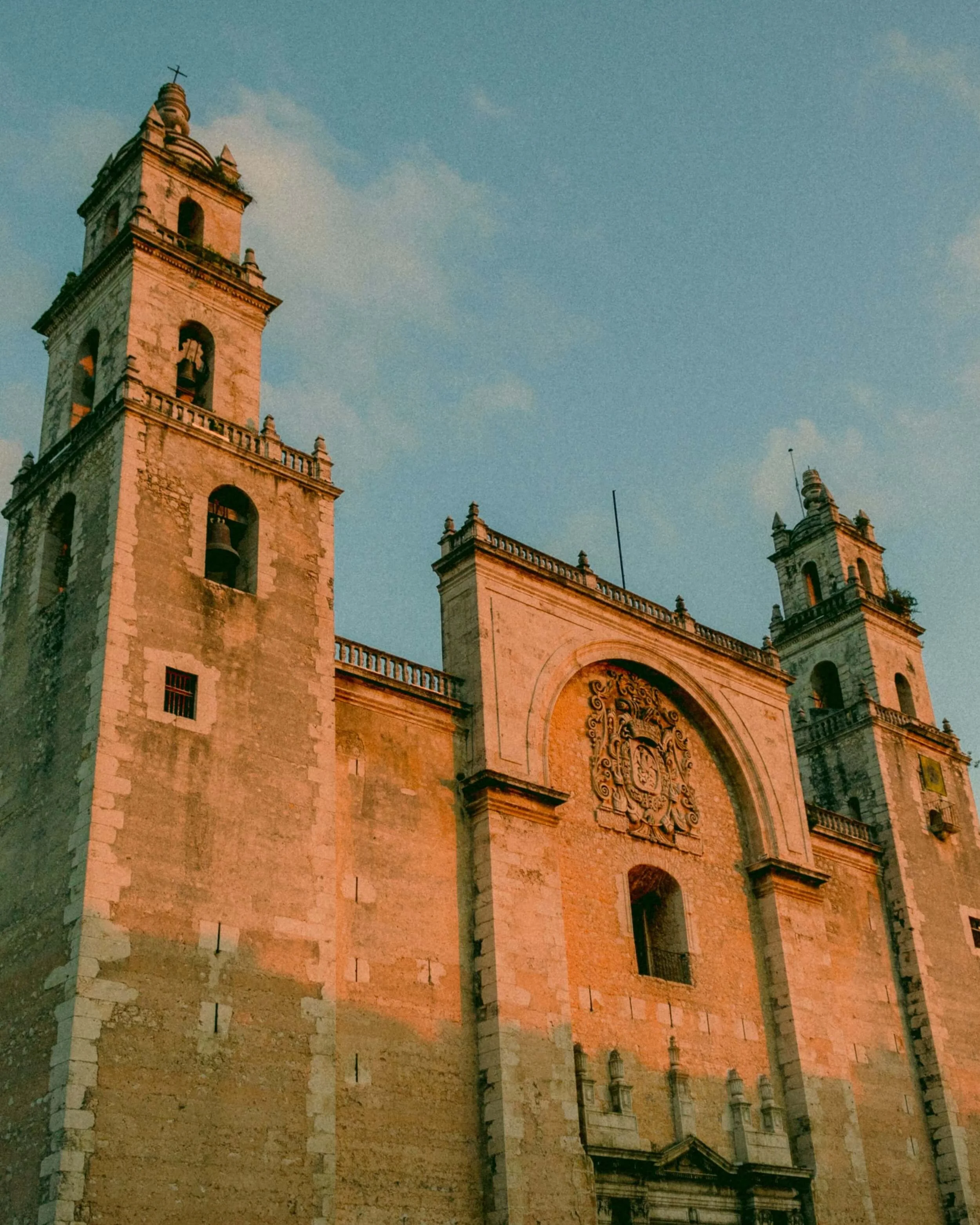
01 · The City
Mérida is where people come when they want Mexico at a gentler pace. The colonial centre is walkable and comes alive in the evenings, and the state's safety record draws many people here. The 2020 census counted 12,114 foreign-born residents in the municipality, 2,954 of them born in the US.
The heat is serious for much of the year, the north of the city is built around the car, and flights home are fewer. For the right person, none of that outweighs what the city gives back.
What keeps us here is the community and the family network. We came with a support network and wanted to build something from the ground up, rooted in Mérida.
People arrive knowing Spanish will be essential, for the culture and the bureaucracy, but underestimate how long it takes to become properly proficient.
A CITY THAT REWARDS A SLOWER PACE
Mérida is not for everyone, and it helps to know that early. It rewards people who want a settled, unhurried life and can make peace with the heat. If hot weather drains you, or you want a big-city calendar of concerts and nightlife, you will probably be happier elsewhere, and we will tell you so.
A calm base for focused work, on Central Time all year to line up with US hours. Check the connection in the exact building before you sign.
Digital nomad serviceInternational schools exist, but the choice is narrower than in other big cities. Confirm a year-group place before choosing a neighbourhood.
Family relocationsAssignments are less common than in other cities. Energy projects and the US Consulate General's new purpose-built campus bring the main exceptions.
Corporate serviceCulture, a slower rhythm and a strong safety record. Weigh the heat and flights to family first.
Retiree serviceWHAT A COMFORTABLE LIFE COSTS.
Rent sets the budget. In our experience it depends on the neighbourhood, nearby amenities and the type of property (casa, casita, apartment, townhouse or condo), and runs from about USD 400 to 2,000 a month (MXN 6,824 to 34,120). A comfortable, modern mid-to-upper apartment in a nice neighbourhood is around USD 1,500 (about MXN 25,600). The power bill rises sharply once you run air conditioning in the hot months. Our city-by-city budgets compare Mérida with the rest of the country.
| City | Monthly budget, couple | Character |
|---|---|---|
| Mérida | $2,000–$3,000 | Lower cost, hot climate, very safe |
| Puerto Vallarta | $3,060–$5,340 | Beach lifestyle, established expat base |
| San Miguel de Allende | $3,000–$4,500 | Premium colonial town, strong expat scene |
| Lake Chapala | $2,000–$3,000 | Gentle climate, long-standing retiree hub |
| Mexico City | $3,000–$4,500 | Culture, food and healthcare at their best |
Peso figures on this page are converted at 17.06 MXN per USD (September 2026) and rounded.
WHERE TO LIVE IN MÉRIDA: CENTRO OR THE NORTH.
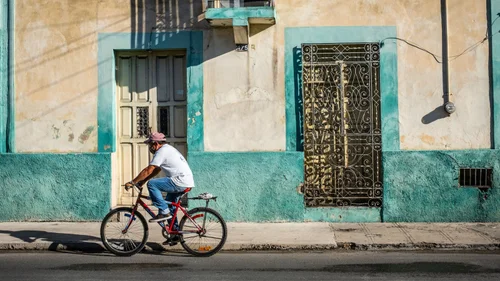
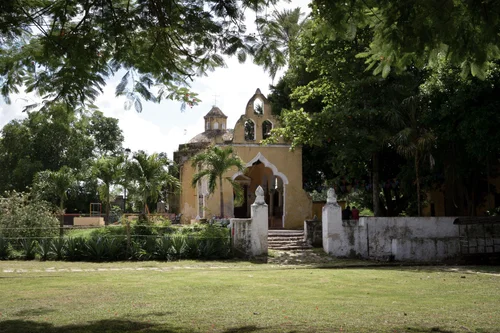
Centro and the barrios near Paseo de Montejo, such as Santa Ana and Santa Lucía, are walkable and historic. The north is newer and quieter, with gated fraccionamientos and privadas, malls and space, and you drive almost everywhere. García Ginerés and Itzimná sit between the two. In our experience, the right answer depends on whether you want to walk to dinner or park at the door.
Landlords commonly ask for one to two months' rent as a deposit; more is sometimes asked without a Mexican guarantor. Our guide on how to move to Mexico explains contracts.
| Area | Character | Suits |
|---|---|---|
| Centro & around Paseo de Montejo | Historic, walkable, lively | Life without a car |
| García Ginerés & Itzimná | Established, residential, central | A middle path |
| Montebello & Altabrisa | Newer, convenient, car-based | Modern services close by |
| Temozón Norte | Newer, spacious, car-dependent | Space and a quieter life |
| Cholul (a comisaría of Mérida) | Gated fraccionamientos, suburban | Families wanting space |
| Progreso (a separate municipality on the coast) | Port town by the sea | Sea air over city life |
THE PRACTICAL PICTURE.
Private hospitals include Star Médica, Hospital Faro del Mayab (CHRISTUS MUGUERZA), Clínica de Mérida and Centro Médico de las Américas. IMSS runs the Hospital de Especialidades of the C.M.N. del Sureste, two general hospitals and 10 family clinics (CLUES, August 2026). Good private insurance matters; IMSS is a safety net, not a plan. Our guide to healthcare in Mexico explains the options.
Uber and DiDi both operate, and the Va y Ven network of the Agencia de Transporte de Yucatán runs about 110 routes, including the IE-TRAM electric bus routes. In our experience, and from people living there, life without a car is realistic centrally: Colonia Alemán and the Calle 47 gastronomic corridor near the new La Plancha park are as walkable as Centro for groceries, cafés, gyms and restaurants. A car mainly helps for airport runs, day trips to beaches, cenotes and Celestún, and the outer north.
The honest version, at state level: Yucatán recorded 2 homicides per 100,000 in 2025, the lowest of the 32 states, against a national 21.4 (INEGI, preliminary, 3 August 2026). It is Level 1 on the 29 May 2026 US State Department advisory. State figures are not a verdict on any one street, and a low homicide rate is not a low pickpocket rate. The data is in our guide to the safest cities in Mexico.
The expat community here is established and close-knit, and most people find their circle through Facebook groups, volunteering, language exchanges and the regulars at Centro's cafés. Outside those circles, daily life runs on Spanish. Even basic Spanish changes the experience, and Yucatecos meet genuine effort more than halfway.
A CUISINE OF ITS OWN, AND A REGION TO EXPLORE.
Yucatecan food is its own tradition, not a regional twist on the Mexican food you know. Expect slow-roasted cochinita pibil, crisp panuchos piled with toppings and a bright, lime-scented sopa de lima, often from markets that start trading early.
Evenings bring the Vaquería on Mondays, the Serenata de Santa Lucía on Thursdays and Noche Mexicana on Saturdays from 8pm to 10pm at the Remate de Paseo de Montejo. On Sunday mornings there is the Biciruta cycle route.
Weekends are the quiet luxury. Sefotur lists 148 cenotes open to visitors across the state. Approximate drive times from the Plaza Grande, without traffic, are 35 minutes to Progreso, 68 to Izamal, 76 to Uxmal, 106 to Chichén Itzá and 130 to Valladolid.
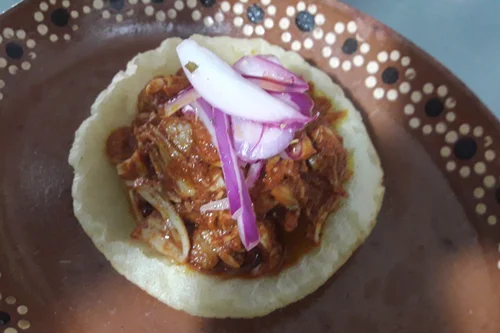
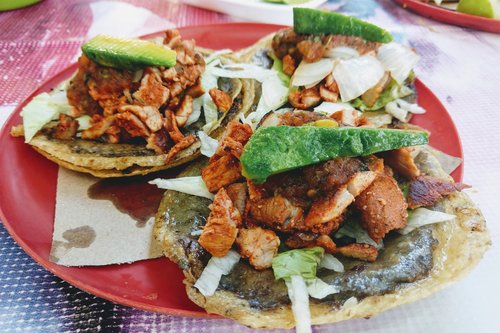

Centre and right photos: "Panuchos from Santa Ana Market" by amanderson2 and "Sopa de lima, Homun, Yucatan, Mexico" by Sharon Hahn Darlin, both CC BY 2.0, cropped.
THE DOWNSIDES
NOBODY MENTIONS
None of these rule Mérida out for most people. Weigh them before you sign a lease, and if you are still choosing between cities, see how Mérida compares with the other places we cover.
- The heat
April and May are the hottest months: May averages a daily high of 37.3 °C, and the rainy season runs from June to October (SMN climate normals, 1981 to 2010). If you can, visit in April or May before you commit: if the heat suits you then, it will suit you all year.
- Hurricane season and summer storms
Yucatán's civil protection programme sets the official season from 1 June to 30 November, and cites Gilberto (1988) and Isidoro (2002) as reference storms. Plan for heavy rain, the odd power cut and disrupted flights.
- Fewer direct flights home
Nonstop US flights of about two to two and a half hours currently include American Airlines from Dallas and Miami and United from Houston, according to the state government, plus seasonal Air Canada from Toronto and WestJet from Calgary this winter.
- Car dependence outside Centro
The north is built for driving, so a privada chosen for space also means a car and its running costs.
- The friction
Admin runs at its own pace: opening a bank account, finding a guarantor for a lease and sorting paperwork all take longer than at home. Small daily adjustments add up too, like drinking bottled water, as about 97% of residents surveyed by the city utility do.
Is Mérida safe to live in?
Yes. Mérida is the capital of Yucatán, statistically the safest state in Mexico. Yucatán recorded 42 presumed homicides in 2025, the lowest state rate (INEGI, preliminary), and in June 2026 38.2% of Mérida residents said they felt unsafe, against 59.8% nationally. Pickpocketing still happens.
How much does it cost to live in Mérida?
A couple living comfortably should budget USD 2,000 to 3,000 a month including rent. In our experience, a well-located two-bedroom runs around MXN 17,000 to 26,000 (about USD 1,000 to 1,500)*. Air conditioning in the hot months pushes the power bill up sharply.
Where do most expats live in Mérida?
Centro suits people who want to walk to dinner. Montebello, Altabrisa, Temozón Norte and the privadas around Cholul suit those wanting space and parking.
How bad is the heat?
Serious. April and May are the hottest months, and the SMN station record is 43.5 °C, set on 27 May 2009. Air conditioning in the bedroom is not optional.
Is Mérida a good place to retire?
For many retirees, yes: a slower pace, a strong safety record, private healthcare and a comfortable life for USD 2,000 to 3,000 a month. The trade-offs are the heat and fewer flights to family. Visas are covered in our guide to retiring in Mexico.
Do you need a car in Mérida?
In our experience, and from people living there, not if you live centrally: Uber is inexpensive and everywhere, the buses are extensive and modern, and some residents have gone years without one. A car mainly helps for airport runs, day trips and the outer north.
*Rent figures are based on our experience with clients and vary by neighbourhood, amenities and property type.
ONE POINT OF CONTACT. EVERYTHING HANDLED.
Residency, a home, a bank account, healthcare and schools, coordinated through a vetted local network by people who have made this exact move. The first conversation is free, and we would rather give you the honest picture than a simplified one.