Cost of living in Mexico in 2026: what it actually costs to live here

Most couples living in Mexico on a settled footing spend about MXN 34,120-85,300 (USD 2,000-5,000) a month, ViaMexico planning estimates that move with city and lifestyle. This guide breaks that national band into monthly city budgets in pesos and dollars, covering rent, healthcare, utilities, food, transport and the one-off costs of arriving.
In this guide:
1. The short answer: what people actually spend
Most people living in Mexico on a settled, comfortable footing as a couple spend about MXN 34,120-85,300 (USD 2,000-5,000) a month, ViaMexico planning estimates that cover housing, food, healthcare and daily life. Where you land in that band depends on the city, the neighbourhood, and whether you rent or own.
This page is ViaMexico’s national cost of living in Mexico guide for 2026, for retirees, remote workers and families alike. Use the city tables to compare monthly totals in pesos and dollars, then see where rent, healthcare and daily life push the band up or down.
Living costs and residency thresholds are not the same number. For the broader path, see our guide to retiring in Mexico. Use the residency calculator to check income or savings against what a consulate asks you to show, and read residency financial requirements for the bands behind those checks.
2. How to read these numbers
Rents and other local costs appear in Mexican pesos first. Dollar figures in brackets use 17.06 MXN per USD, dated September 2026.
Every money band on this page is labelled a ViaMexico planning estimate. These are planning figures for conversation and comparison, not quotes from a landlord, insurer or utility company, and not a guarantee of what you will pay for a specific property.
What “comfortable” means here is a settled household: a well-located rental suited to the city, private health cover where we cite it, groceries and eating out that match how most of our clients actually live, and day-to-day transport. It is not a bare-bones existence and it is not a luxury villa on the beach. It’s a very comfortable life.
International school fees sit outside the monthly grids; see section 8. Arrival deposits, furnishing and first-month setup sit in section 10. City choice and neighbourhood still move the total more than any single line item: renting for the first year while you learn a city, shopping at local markets rather than only imported-goods stores, and matching insurance to age and health history are the practical levers most households use. Lifestyle context by destination sits in our guide to the best cities in Mexico for expats; that page is about how places feel, not about replacing the budgets here.
3. Rent, city by city
Rent is usually the largest single line in a couple’s monthly total. The bands below are ViaMexico planning estimates for well-located rentals of the type most foreign residents ask us about. They are not listings, and asking rents in any one building can sit above or below the band.
| City / product | Monthly rent (ViaMexico planning estimate) | Approx. USD |
|---|---|---|
| Puerto Vallarta, well-located 2-bed | MXN 25,000-40,000 | USD 1,465-2,345 |
| Mexico City (Polanco, Condesa, Lomas), well-located 2-bed | MXN 25,000-45,000 | USD 1,465-2,638 |
| Playa del Carmen, typical 1-bed | MXN 13,500-17,500 | USD 791-1,026 |
| Playa del Carmen, beach / 5th Ave furnished 1-2 bed | MXN 15,000-25,000 | USD 879-1,465 |
Lake Chapala / Ajijic and Mérida do not have separate rent rows on this page. Their full monthly couple totals appear in section 9.
Deposits commonly run to one or two months’ apartment rent. Without a Mexican guarantor, some landlords ask for more. Budget the deposit as an arrival cost, not as part of the ongoing monthly grid.
Neighbourhood still matters as much as city. A quiet residential street a short ride from the centro and a tourist-front building with a view are not the same product, even when both are labelled two-bedroom. For how different cities feel day to day, use the best cities guide; keep this page for the costs.
4. Healthcare and insurance
Private health insurance for a couple is a ViaMexico planning estimate of USD 740-1,340 per month combined. The band moves with age, coverage level, deductible structure and how an insurer views any pre-existing conditions. It is a planning figure only, not an insurer quote.
Many foreign residents also look at IMSS Seguro de Salud para la Familia as a lower-cost public backup rather than as their only cover. Our fuller clinical and practical picture is in healthcare in Mexico for expats.
| Age band | MXN per person per year | Approx. USD |
|---|---|---|
| 0-19 | 9,300 | $545 |
| 20-29 | 11,550 | $677 |
| 30-39 | 12,350 | $724 |
| 40-49 | 14,350 | $841 |
| 50-59 | 14,850 | $871 |
| 60-69 | 20,600 | $1,208 |
| 70-79 | 21,500 | $1,260 |
| 80+ | 22,150 | $1,298 |
A couple’s annual cuota is the sum of each member’s band. Example: both partners aged 62 → MXN 41,200 per year (about USD 2,415). IMSS can refuse some applicants; treat the table as the published price list, not as a guarantee of acceptance.
On private Mexican cover, age limits matter as much as price. GNP states a maximum contracting age of 70 for its Seguro de Gastos Médicos Mayores Esencial; applicants aged 65-70 need medical studies; without annual-deductible options, maximum acceptance is 64. Attribute that rule to GNP and check the product page directly: gnp.com.mx/seguro-de-gastos-medicos-mayores-esencial. Do not assume every Mexican insurer uses the same cut-offs.
VIAMEXICO NOTE IMSS Seguro de Salud para la Familia is not a flat annual fee. Official annual cuotas from 1 March 2026 are set by age band, per person, on the IMSS trámites page (imss.gob.mx/tramites/imss02014)
5. Utilities, internet and phone
For a well-located Mexico City household, ViaMexico planning estimates put utilities (electricity, water, internet and gas) at USD 100-200 a month (MXN 1,706-3,412). Electricity moves most with air-conditioning; fibre in most expat neighbourhoods is usually enough for remote work with a known provider.
Other cities do not have separate utility rows locked on this page. Use the Mexico City sample as a sense of scale for a settled rental, then judge your own climate and dwelling size. A high-rise with central systems and a house with a pool and heavy air-conditioning are not the same bill. Phone plans are usually modest next to electricity; many residents keep a Mexican mobile on a prepaid or modest postpaid plan and a home fibre line for work.
6. Food, eating out and groceries
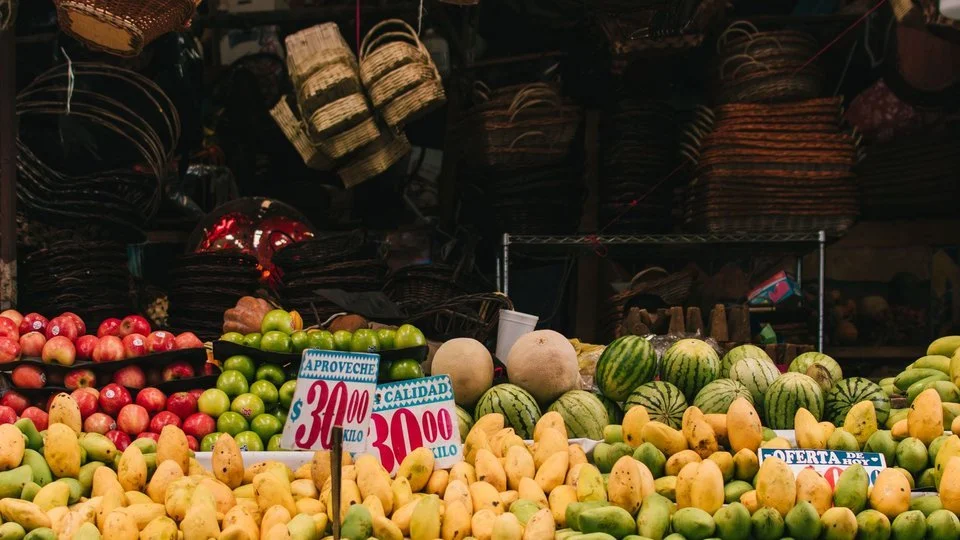
Using Puerto Vallarta as the sample city: ViaMexico planning estimates put groceries at USD 300-500 a month (MXN 5,118-8,530) and dining out at USD 250-450 a month (MXN 4,265-7,677) for a couple living as most of our clients describe.
Shopping at local markets and neighbourhood tiendas for produce, tortillas and staples, then using a supermarket for the rest, is how many settled households keep the grocery line steady. Imported brands, specialty wines and frequent restaurant meals in tourist corridors push the total toward the top of the band or beyond it. The same logic applies in Mérida, Chapala and Mexico City even where we have not locked a separate food row: local produce is priced in pesos for the local market; imported habits are priced closer to what you left behind.

7. Transport
ViaMexico planning estimates put transport at USD 70-150 a month (MXN 1,194-2,559) for local taxis, rideshare and occasional longer trips. A car adds insurance, parking, fuel and maintenance; importing a vehicle is a separate one-off (section 10).
In Mexico City the standard Metro fare is MXN 5.00. Rideshare and taxis cover late evenings, luggage and gaps in the network. In smaller lakeside and beach towns, walking, buses and short rideshare trips often replace a daily car, though some households still keep one for weekends and medical appointments.
8. Schooling, if you have children
School fees are not built into the couple monthly budgets on this page. If you are relocating with children, treat international school fees as their own major line and read our dedicated guide to international schools in Mexico City for how that market works. Families planning a move with schooling in mind can also start with ViaMexico’s families service page.
9. Full monthly budgets by city
These couple totals are ViaMexico planning estimates for a settled monthly life in each place. They typically assume rent in a well-located home suited to the city, private health insurance in the band discussed above where relevant, groceries, dining out, utilities and day-to-day transport. They exclude international school fees and the one-off costs of arriving.
| City | Couple monthly total (ViaMexico planning estimate) | Approx. USD |
|---|---|---|
| Puerto Vallarta | MXN 52,204-91,100 | USD 3,060-5,340 |
| Lake Chapala / Ajijic | MXN 34,120-51,180 | USD 2,000-3,000 |
| Mexico City (Polanco, Condesa, Lomas) | MXN 51,180-76,770+ | USD 3,000-4,500+ |
| Mérida | MXN 34,120-51,180 | USD 2,000-3,000 |
| Playa del Carmen | MXN 40,944-64,828 | USD 2,400-3,800 |
For a single person, plan on roughly half of each couple band, with an important caveat: one-bedroom rent and a single private insurance premium will not always land at exactly 50% of the couple figures. Some fixed costs barely shrink; some housing products are priced for couples or roommates. Build a single budget from the rent and insurance lines that match your actual search, not from a mechanical half.
Add school fees and any larger housing need on top of the couple grid if that is your household.
10. One-off costs of arriving
The combined first-months outlay for deposits, basic setup and related arrival costs is a ViaMexico planning estimate of USD 4,000-10,000 (MXN 68,240-170,600). Where you land in that band depends on deposit size, whether the rental is furnished, whether you buy a car, and how much you spend on initial healthcare setup.
| Cost | Planning note |
|---|---|
| Housing deposit | Commonly 1-2 months’ apartment rent; sometimes more without a Mexican guarantor |
| Furnishing / household setup | Needed when the rental is unfurnished or lightly equipped |
| Vehicle | Import, buy locally, or go without |
| Initial healthcare setup | Private policy start, medical studies if required, first consultations |
| Government residency fees (optional alignment) | Temporary residency year-1 government fee about MXN 11,141 (USD 653); permanent about MXN 13,579 (USD 796). These are LFD-aligned government fee figures used on our immigration pages, not ViaMexico service fees. |
11. How much money to retire in Mexico
If your question is specifically how much money to retire in Mexico, start with the same couple bands in section 9 and then layer retirement-specific choices: when private insurance becomes harder to place, how Social Security fits the monthly total, and whether you want lakeside, beach or big-city life. The national planning band of MXN 34,120-85,300 (USD 2,000-5,000) a month for a couple remains the honest short answer; Lake Chapala, Mérida and similar places often sit toward the lower half, while well-located Puerto Vallarta and premium Mexico City neighbourhoods sit higher.
The fuller lifestyle and visa picture sits in retiring in Mexico. ViaMexico’s retiree relocation work starts from your real numbers rather than a single national average.
What Social Security covers in Mexico
Eligible US citizens can generally receive US Social Security benefits while living in Mexico. There is no reduction solely because you live abroad.
For many retired couples, Social Security covers a meaningful share of a settled Mexico budget, particularly outside the most expensive neighbourhoods of Mexico City. In premium districts and higher Puerto Vallarta rentals, it is rarely the whole picture without savings or other income. Pair the benefit with the city totals above rather than treating either number in isolation.
12. What our clients actually spend
The city ranges above are a useful starting point. They are not a forecast of any one household.
Factors that commonly swing the total include:
Pet relocation. Flights, documentation and ongoing care add a meaningful sum for anyone bringing animals; they are a non-factor for those without pets.
Housing choice. A furnished high-end rental in Polanco costs multiples of a comfortable two-bedroom in Mérida or Ajijic.
Vehicle needs. Importing a car, buying locally, or going without all carry different costs.
Healthcare situation. Pre-existing conditions or a preference for top-tier private hospitals push insurance and care above the planning band in section 4.
Family size and schooling. A retired couple’s budget looks nothing like a family paying international school fees on top of everything else.
VIAMEXICO NOTE The real total depends on the specifics. Pet relocation, housing choice, whether you keep a car, healthcare history and schooling can each move the monthly figure by a wide margin. That is why the retiree relocation service begins with an honest conversation about circumstances rather than a generic estimate.
13. Frequently asked questions
-
For a single person, plan on roughly half of each couple band in the city budgets below, with a caveat: one-bedroom rent and a single private insurance premium will not always land at exactly 50% of the couple figures. Some fixed costs barely shrink. Build from the rent and insurance lines that match your search, not from a mechanical half. See Full monthly budgets by city.
-
Local costs are priced in pesos. As a ViaMexico planning estimate, most settled couples spend about MXN 34,120-85,300 a month (USD 2,000-5,000 at 17.06 MXN per USD, dated September 2026). City totals sit in the budgets by city section; use pesos for rent and day-to-day costs and treat dollars as a conversion check.
-
ViaMexico planning estimates put groceries at USD 300-500 a month (MXN 5,118-8,530) and dining out at USD 250-450 a month (MXN 4,265-7,677) for a couple. Local markets keep the grocery line steadier than imported-only shopping. Full detail is in Food, eating out and groceries.
-
It can work for some settled couples in places such as Lake Chapala / Ajijic and Mérida, and it will not in premium Mexico City neighbourhoods or higher Puerto Vallarta rentals. Use the city budgets, not a single national number.
-
No. Consular income or savings proof is a residency threshold, not what you will spend each month. See Mexico residency financial requirements and the residency calculator.
-
No. Monthly budgets here exclude international school fees and most arrival deposits. School fees sit in the international schools guide; arrival one-offs including deposits are in One-off costs of arriving.
14. How ViaMexico can help
ViaMexico helps people relocate to Mexico with clear numbers, the right residency path, and practical setup on the ground. If you are planning retirement here, the dedicated starting point is our retiree relocation service. Families weighing schooling and a longer horizon can begin on the families page. Bring the city bands from this guide to that first conversation; we will stress-test them against your household rather than leaving you with a single national average.