
Renting an apartment in Mexico: contracts, deposits and the fiador

Renting in Mexico as a foreigner is straightforward on paper and harder in practice, because most landlords want a local guarantor. This guide covers what landlords ask for, the alternatives to a fiador, how to read the contract and how to protect your deposit.
Foreigners can rent in Mexico on a tourist or residency status: nothing in Mexican immigration or civil law stops a visitor from signing a lease. The main obstacle is not the paperwork but the landlord's demand for a fiador, a local guarantor who owns property.
In this guide

1. How renting in Mexico actually works
The Mexican rental market is led by agents and shaped by landlords. Most good apartments are listed through a broker, and the landlord sets the terms. Most leases run for 12 months. The federal civil code treats one year as the minimum for a home unless both sides agree otherwise, and shorter terms tend to come at a premium.
For foreigners, the friction is rarely about nationality. It comes from having no local credit history and, above all, no one who owns property here to sign as guarantor.
The market also varies by city. Where you settle shapes how competitive the search feels, so it helps to compare the best cities in Mexico for expats before you fix on a neighbourhood.
2. Where to look, and where not to
There are four main channels. Agents hold much of the better stock and handle viewings and paperwork. Online portals give a sense of the market, though listings can be stale. "Se renta" signs still matter where owners prefer to deal directly, and word of mouth often finds apartments that never reach a portal.
If you are heading for the capital, our complete guide to moving to Mexico City explains how the neighbourhoods differ before you start viewing.
Scams follow familiar patterns. Be wary of anyone who asks for a deposit before you have seen the property, who cannot show proof that they own it or are authorised to let it, or whose price sits well below everything around it. Agencies do not have to register lease contracts with PROFECO, the consumer authority. In Mexico City the law requires the landlord to register the lease in the city's digital registry within 30 days of signing; how far that registry is working in practice is still unclear, so ask whether yours has been registered.
3. What landlords will ask you for
Expect a request for most of the following:
Identification: your passport.
Migration status: your visitor or resident card. No law bars a visitor from renting; landlords decide whom they accept, and some ask for residency.
Proof of income: bank statements, a pension statement or an employment letter.
References: from a previous landlord or employer, sometimes translated.
A guarantor: the fiador, covered in the next section.
Your status matters to landlords because it signals how long you plan to stay. Our guide to temporary residency in Mexico explains the usual first step for people relocating.
Long-term residents can point to a more settled status, and our guide to Mexican permanent residency covers who qualifies.
A local account helps on both sides of the lease, for showing income and for paying rent by transfer. Our guide to opening a bank account in Mexico as a foreigner explains what you need.
4. The fiador problem, and the ways round it
What a fiador is
A fiador is a guarantor who agrees to pay if you do not. The civil code only asks that the guarantor can legally bind themselves and has enough assets to cover the debt. Landlords usually go further and ask for someone who owns property in the same state, often showing the title deed, but that is the landlord's condition, not a legal one.
Why landlords ask
Recovering unpaid rent through the courts can be slow, and the fiador gives the landlord an asset to pursue.
Póliza jurídica
A póliza jurídica is a private product, not something defined in Mexican law. Most are legal-services contracts: a firm vets the tenant, drafts the lease and handles any eviction. If a product promises to pay the rent when you do not, it works as a guarantee bond (fianza), and Mexican law reserves paid bonds to institutions authorised by the CNSF, the insurance and bonds regulator. Trade-off: it is widely accepted, but it is an extra cost and you should read what it covers before you assume it protects you.
A larger deposit
Some landlords will accept a bigger deposit instead of a guarantor. Landlords commonly ask for 1 to 2 months' rent as a deposit; more is sometimes asked without a Mexican guarantor. Trade-off: more of your money is tied up, and you depend on getting it back.
Paying months upfront
Paying several months in advance reassures some landlords. Trade-off: if plans change, recovering that money can be hard.
A corporate lease
If an employer is relocating you, the company can sign the lease. Trade-off: it only works for those with an employer willing to do it.
Furnished or short-let premium
Furnished and short lets often skip the fiador. Trade-off: you pay more each month.
VIAMEXICO NOTE: I deal with landlords and agents every week, and the fiador question comes up almost every time. Most landlords are more flexible than their listing suggests once they see a complete file: a póliza jurídica, proof of income and a clear explanation of why you are in Mexico. Paying several months upfront can also help, but I would only agree to it with a signed contract and a receipt for every peso.
5. Reading a Mexican rental contract
Term: the length of the lease and how it renews. If you stay on after a fixed term and the landlord does not object, the federal code treats the lease as continuing with no end date, and either side can then end it with written notice. Notice rules may differ by state, so check the notice clause.
Rent increases: when and by how much rent can rise. Rent must be agreed in pesos.
The deposit clause: the amount, what it covers and when it comes back.
Early exit: the penalty for leaving before the term ends, often expressed in months of rent.
Maintenance fee (cuota de mantenimiento): whether rent includes it, and who pays the regular fee and any one-off building charges. By law the tenant stays jointly liable for it, so make sure the lease is clear.
Repairs: who handles what, and how quickly.
Predial: property tax is the owner's legal obligation. Some leases pass the cost on, so check the clause.
Sale of the property: under the federal code, a tenant has a right of first refusal if the landlord sells, with 15 days to match the offer. Rules differ by state: in Jalisco the main right is to be preferred for a new lease after three years.
The notary: some landlords want the contract signed before a notary, which adds cost and time.
Contracts are almost always in Spanish, so a bilingual contract or professional translation is advisable. Even some basic Spanish helps, and our guide to learning Spanish in Mexico suggests where to start.
6. Deposits and what you get back
Landlords commonly ask for 1 to 2 months' rent as a deposit; more is sometimes asked without a Mexican guarantor. This is practice, not a figure fixed in law: no federal or state code sets a maximum, and the contract simply has to state the guarantee.
What protects that money most is the move-in inventory. Walk through the apartment with the landlord or agent, list every appliance and fitting, note any damage, and have both sides sign. Take dated photographs of every room and keep them until well after you move out.
When you leave, the landlord inspects the property against that inventory and deducts the cost of anything beyond normal wear. The federal civil code says any balance owed to the tenant must be returned straight away, unless the landlord has a claim against the tenant, in which case the money is meant to be lodged with a court. In practice the deposit is set against unpaid bills and damage, which is why the signed inventory matters. Agree in writing how and when it will come back.
VIAMEXICO NOTE: When a deposit goes wrong, it is rarely about one big item. It is usually a list of small things nobody wrote down on moving day, such as a marked wall, a missing remote or a stain on a sofa. That is why I walk through every room with the tenant at handover, take dated photos and get the inventory signed by both sides before anyone moves a box.

An apartment block in Mexico City. Whatever the building, a signed move-in inventory and dated photos are what protect your deposit. Credit: Photo by Tiarra Sorte on Pexels.
7. What your rent will and will not cover
Rent usually covers the apartment and little else. Check what each price includes:
Maintenance fee (cuota de mantenimiento): the building's charge for running and maintaining the common areas and services. Sometimes included in the rent, often billed separately.
Parking: one space may come with the apartment, a second often costs extra, and some older buildings have none.
Utilities: almost always the tenant's responsibility, with serviced apartments being the exception.
For rent levels by city, see section 3 of our cost of living in Mexico guide.
8. Furnished, unfurnished and what those mean here
"Furnished" in Mexico ranges from fully equipped to a sofa and a bed. "Unfurnished" can mean more than empty rooms: some apartments come without a fridge, cooker or washing machine, and occasionally without light fittings or curtain rails. Ask for an itemised list, and confirm it at the inventory.
VIAMEXICO NOTE: I visit apartments every week, and "unfurnished" means something different almost every time. Some come with a fitted kitchen, a cooker and even a fridge; others have bare walls, no light fittings and nowhere to hang curtains. I always ask the agent for a written list of what stays, and I check it against the apartment on the day the keys are handed over.
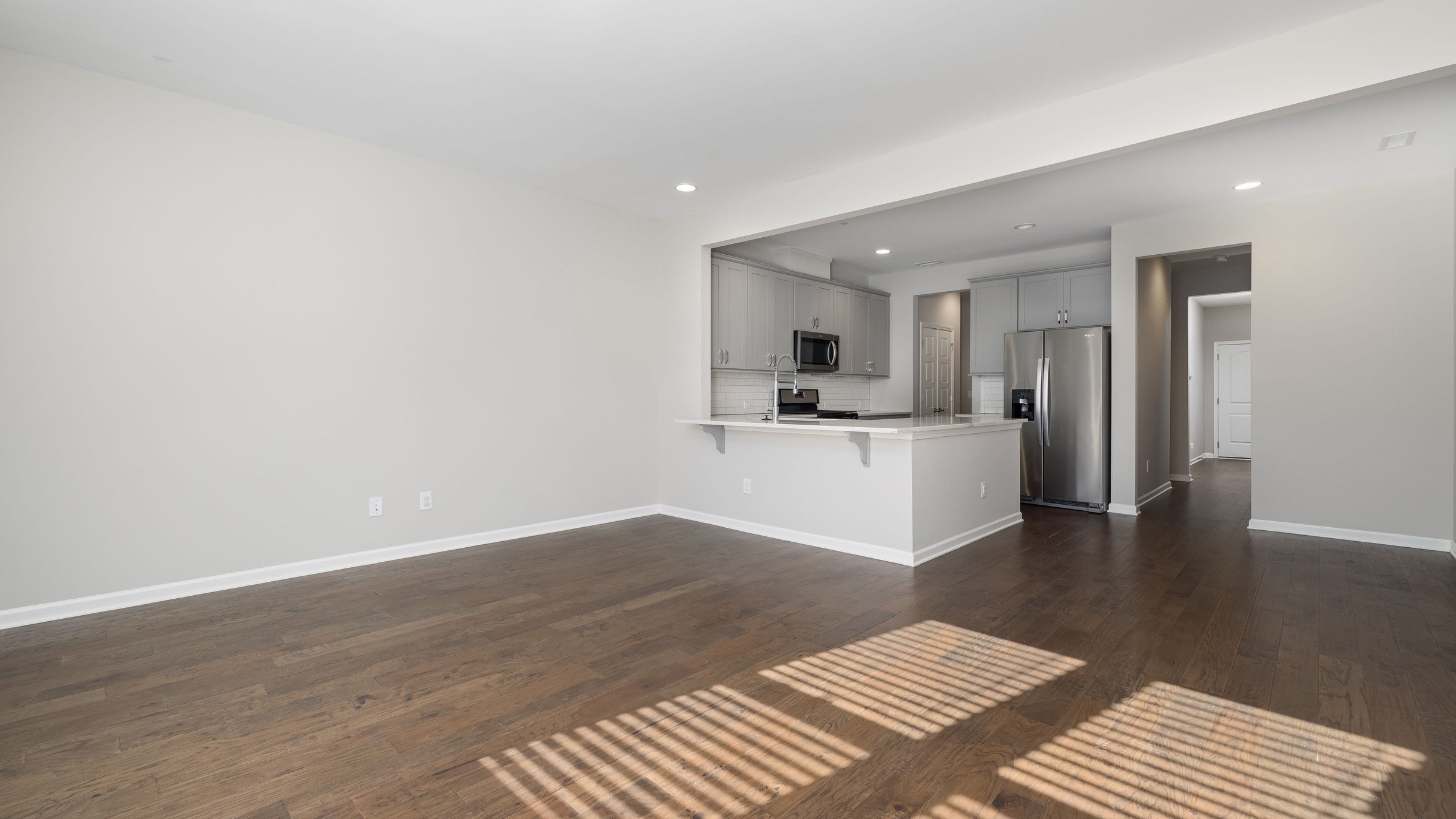
Unfurnished can mean anything from a fitted kitchen with appliances to bare walls, so confirm what stays before you sign. Credit: Photo by Curtis Adams on Pexels.
9. Utilities and setting them up
Electricity comes from CFE, the state utility. CFE's own contracting list asks for official ID, the address and a Mexican tax number (RFC), and the account often stays in the owner's name, with the tenant paying the bills. Confirm what you need with CFE on 071. CFE charges a deposit on the first bill if you contract in your own name. Gas arrives either through a stationary tank on the roof, refilled by truck, or as portable cylinders delivered to the door. Water is billed by the local utility, often through the owner or the building. Book internet early, as installation can take time.
Agree in the contract whose name goes on each account and who pays any arrears from before you moved in.
10. Before you sign: the checklist
- I have seen the apartment in person, or someone I trust has.
- I have checked that the landlord owns the property or is authorised to let it.
- I know what the rent includes and excludes, including the maintenance fee.
- I have agreed the guarantor arrangement: fiador, póliza jurídica, larger deposit or advance payment.
- I have read every clause, with a translation if needed.
- I understand the term, renewal, rent increases and early exit penalty.
- I know whether rent includes the maintenance fee, and who pays any extraordinary building charges.
- I know who pays the predial and each utility.
- The move-in inventory is signed by both sides, with dated photos.
- I have a written receipt for the deposit and any advance rent.
For a wider view of what catches newcomers out in the first months, read What I got wrong in my first year in Mexico by John Watson, ViaMexico's founder.
11. Frequently asked questions
-
Yes. The Ley de Migración limits visitors only in paid activity, and nothing stops them signing a lease. In practice, some landlords prefer tenants with residency, and short stays may push you towards furnished lets.
-
You can, and some contracts are signed remotely. The risk is committing to a place you have not seen. Many people take a short let first and sign once they have viewed in person.
-
The law requires a written lease, and if there is none the fault is the landlord's. A verbal agreement can still be proven and turned into a written contract, but that is a dispute you want to avoid: sign a written lease.
-
In Mexico City, the civil code allows the rent on a home to rise once a year at most, and never by more than the previous year's inflation as reported by the Banco de México; the Supreme Court upheld this rule in February 2026. Elsewhere the rules vary by state and the federal code sets no cap, so ask for the increase clause in writing.
-
Legally the predial falls on the owner, though a lease can pass it on. Many leases make the tenant pay the maintenance fee, either inside the rent or on top, and the tenant stays jointly liable for it by law. The contract should say which.
12. How ViaMexico can help
Renting in Mexico goes smoothly when someone who knows the system is on your side from the first viewing to the day you get the keys. That is what we do for every client, and it is part of our full relocation package. On a rental, we:
shortlist properties and arrange viewings in neighbourhoods that suit the way you want to live;
solve the fiador problem, either by arranging a póliza jurídica or by negotiating an alternative with the landlord;
review the contract and negotiate the rent and the clauses that matter most: the term, rent increases, the deposit, early exit, the maintenance fee and predial;
run the move-in inventory with you, with dated photos, so your deposit is protected from day one;
set up electricity, gas, water and internet in the right name.
The rental sits inside one fixed-price package that also covers your residency, your bank account, your RFC tax number, help with healthcare and settling into your new neighbourhood. You deal with one team who knows your whole move, and nothing is left to chance.
Whether you are retiring to Mexico or moving with your family, we handle it from start to finish.

Related guides
Sources
Código Civil Federal, Cámara de Diputados, arts. 1798, 1833, 2398, 2406, 2422, 2425, 2442 to 2444, 2448 C, 2448 F, 2448 J, 2448 K, 2478, 2487, 2794, 2802, 2811 and 2850, última reforma DOF 14 November 2025: CCF
Código Civil para el Distrito Federal, Gaceta Oficial de la Ciudad de México, decree reforming arts. 2448 D and 2448 F, 28 August 2024 (copy held by PAOT): Gaceta Oficial CDMX
Suprema Corte de Justicia de la Nación, Pleno, Amparo en revisión 546/2025, upholding arts. 2448 D and 2448 F, vote of 18 February 2026: SCJN ruling
Ley de Propiedad en Condominio de Inmuebles para el Distrito Federal, PROSOC (CDMX government), arts. 2, 19, 26, 33, 55 and 59, última reforma Gaceta Oficial CDMX 4 August 2023: LPCI CDMX
Código Civil del Estado de Jalisco, Gobierno de Jalisco, arts. 1026, 1029, 1987, 2002, 2023, 2025 to 2028, 2039, 2041, 2044 and 2415, transparency edition (undated): Código Civil de Jalisco
Ley de Hacienda Municipal del Estado de Jalisco, Gobierno de Jalisco, art. 93 (predial): Ley de Hacienda Municipal
Código Fiscal de la Ciudad de México, Secretaría de Administración y Finanzas CDMX, art. 126 (predial), 2024 extract: Código Fiscal CDMX
Constitución Política de los Estados Unidos Mexicanos, Cámara de Diputados, art. 33, current edition: Constitución
Ley de Migración, Cámara de Diputados, art. 52 fr. I, última reforma DOF 15 January 2026: Ley de Migración
Ley de Instituciones de Seguros y de Fianzas, Cámara de Diputados, arts. 11, 32, 33 and 36, current edition: LISF
Ley Federal de Protección al Consumidor, PROFECO, arts. 73, 86 and 87, PROFECO compiled edition: LFPC
NOM-247-SE-2021 (real estate sales and rental practices), Secretaría de Economía, DOF 22 March 2022, in force 19 September 2022: NOM-247-SE-2021
Comisión Federal de Electricidad, "Contratación para Clientes de Tarifa Doméstica", requirements list, undated: CFE contracting leaflet
Ventanilla de trámites del sector energía, Secretaría de Energía, ficha 349 (CFE contracting), undated: Ficha 349
Servicio de Administración Tributaria, "Inscríbete en el RFC como persona física si eres extranjero", live page: SAT RFC for foreigners
Immigration thresholds and government fees are kept current. Dollar amounts use 18.19 pesos per USD (Banxico, 2 October 2026), updated monthly.